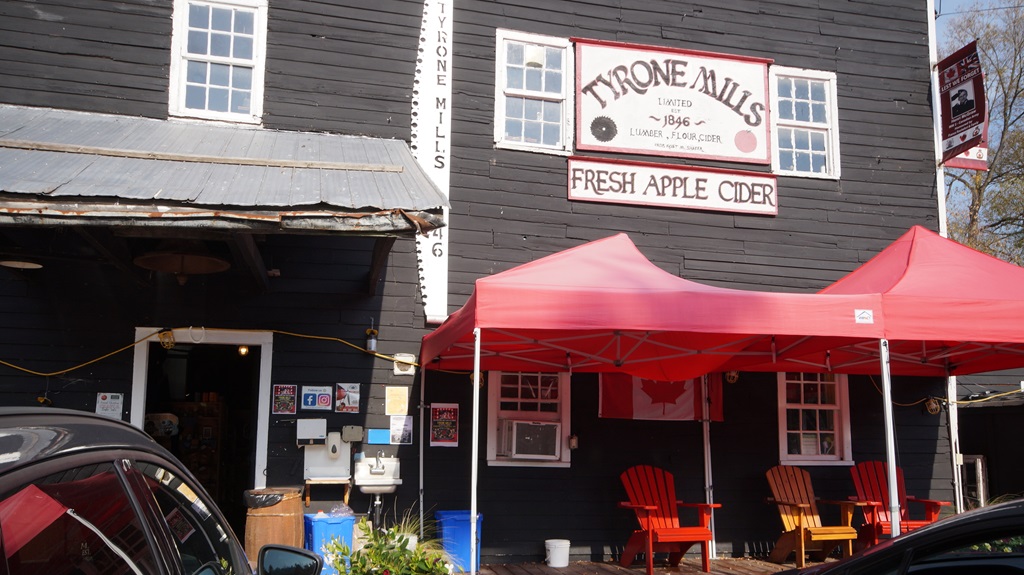
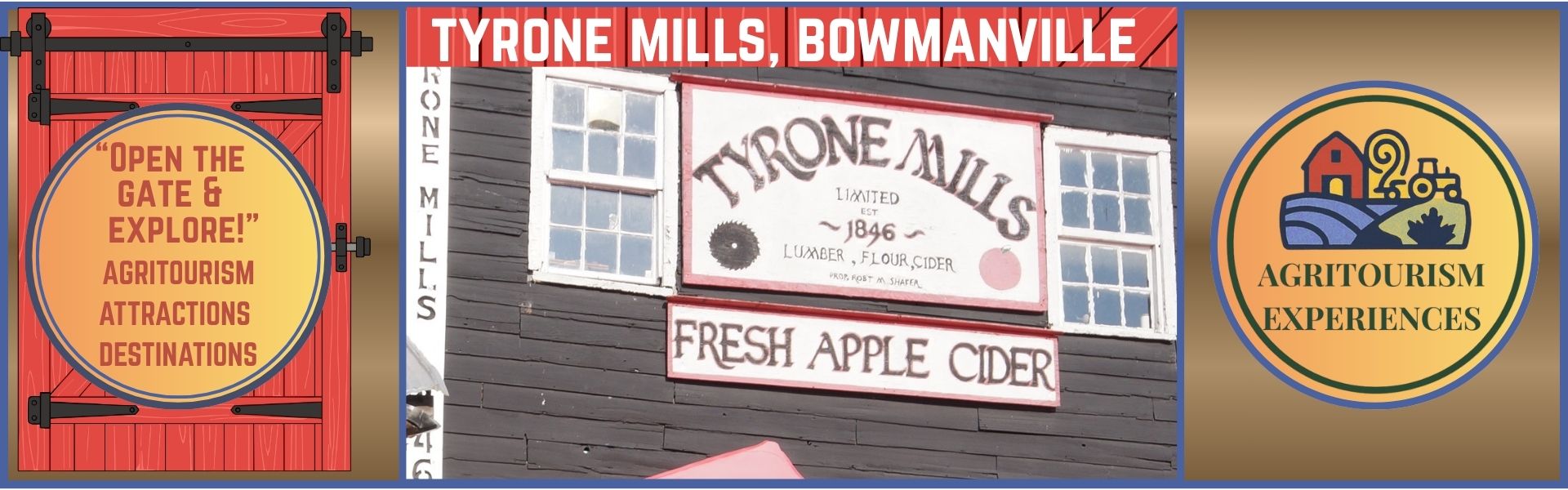






Tyrone Mills is one of Ontario’s most authentic agritourism attractions — a rare, fully operational 19th-century water-powered grist mill that continues to grind flour using traditional methods. Located just outside Bowmanville, this historic site offers visitors a hands-on connection to Ontario’s agricultural and milling heritage.
Established in the 1840s, Tyrone Mills has served the farming community for generations, converting locally grown grains into flour and feed using water power drawn from the Bowmanville Creek. Today, the mill remains family-owned and operated, preserving both the machinery and the knowledge that once sustained rural Ontario.

Unlike many historic sites, Tyrone Mills is not a reconstruction or a static museum. It is a working agricultural facility, where grain is still milled using stone grinding wheels powered by flowing water. This offers visitors a rare opportunity to see how early Ontario farmers processed their crops long before modern industrial milling.
The mill produces:
Each product reflects traditional agricultural practices that emphasize quality, craftsmanship, and respect for the land.

Visitors to Tyrone Mills experience more than shopping — they step into a living agricultural story. The site allows guests to:
Interpretive displays and knowledgeable staff help bring the agricultural story to life, making the mill accessible and engaging for visitors of all ages.
Tyrone Mills plays an important role in safeguarding agricultural knowledge that has largely disappeared elsewhere. By continuing to operate the mill as it was originally designed, the owners ensure that:
This hands-on preservation makes the site especially valuable within Ontario’s growing agritourism landscape.

Surrounded by farmland and natural landscapes, Tyrone Mills reflects the rural character that defined much of Durham Region’s early development. It remains closely connected to local farmers, bakers, and food producers, reinforcing the idea that agriculture is not just history — it is an ongoing, evolving part of community life.
Tyrone Mills represents the heart of Ontario agritourism:
For visitors seeking an experience rooted in authenticity, craftsmanship, and rural heritage, Tyrone Mills offers something truly special.

Bowmanville is a vibrant community with deep agricultural roots, shaped by fertile land, waterways, and early settlement along Lake Ontario. As one of Durham Region’s historic centres, Bowmanville has long served as a bridge between rural farmland and growing urban life.
From its earliest days, Bowmanville developed as a service centre for surrounding farms. Mills, creameries, blacksmith shops, and grain operations formed the backbone of the local economy, supporting farmers throughout the region. Waterways like Bowmanville Creek powered early industry, making the area ideal for milling operations such as Tyrone Mills.
Agriculture was not peripheral — it was central to Bowmanville’s growth.

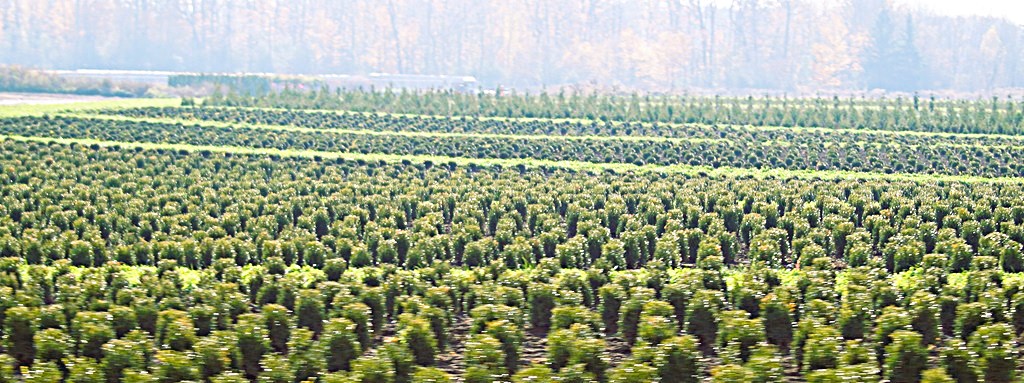
Beyond the downtown core, Bowmanville remains closely connected to its agricultural surroundings. The area features:
These landscapes continue to shape the character of the community.
Bowmanville has made a strong commitment to preserving its past. Historic buildings, museums, and cultural sites throughout the area highlight the importance of agriculture, industry, and rural life in shaping the community.
Agritourism attractions like Tyrone Mills fit naturally into this landscape, offering visitors an authentic way to experience that heritage firsthand.

While Bowmanville continues to grow, agriculture remains a vital part of the region’s identity. Farms, markets, mills, and agritourism destinations help maintain a strong connection between residents, visitors, and the land that has sustained the community for generations.
This balance between growth and heritage is one of Bowmanville’s defining strengths.
Together, Bowmanville and Tyrone Mills highlight:

Whether exploring historic sites, travelling rural roads, or visiting agritourism destinations like Tyrone Mills, Bowmanville offers a meaningful Ontario experience — one where agriculture is not just remembered, but still actively shaping community life.