



Rooted and Rising: Farming in Ontario from Three Sisters to Smart Sensors
Ontario’s farm story stretches from Indigenous gardens and wild rice beds to GPS-guided tractors and robotic milking parlours. It’s a story of ingenuity and adaptation, shaped by soils as different as the muck of the Holland Marsh and the clays of the North, by threats and opportunities from climate and markets, and by a persistent drive to feed communities close to home and far beyond.
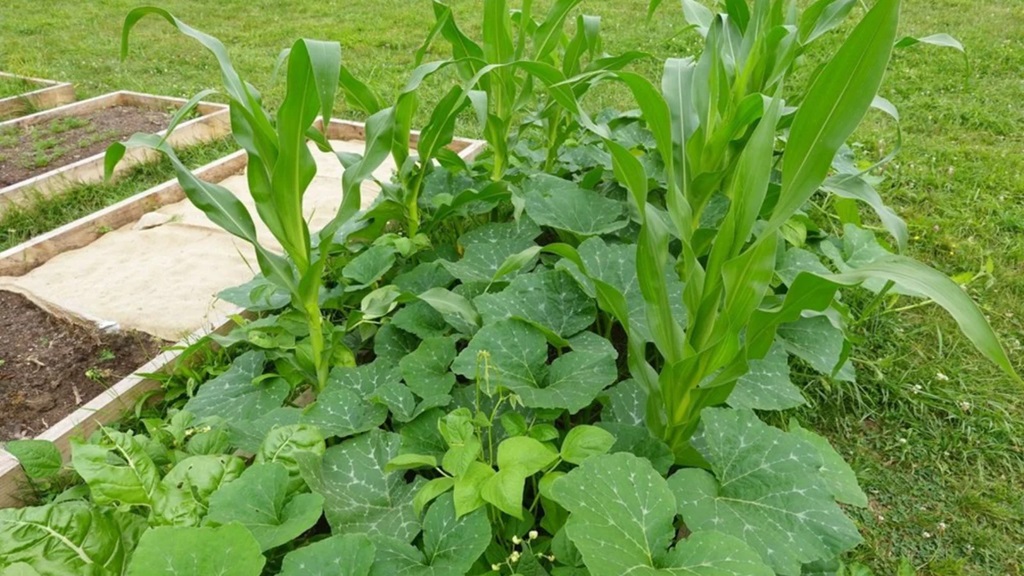
Three Sisters
First farmers and keepers of the land
Long before European settlement, Haudenosaunee (including Wendat/Huron) communities in southern Ontario cultivated corn, beans, and squash together in the famed “Three Sisters” system. This intercropping method, corn as a living trellis, beans fixing nitrogen, squash shading and conserving moisture, was both elegant and productive, and it underpinned diets and trade networks across the Great Lakes–St. Lawrence region. Contemporary agronomists still study it for its ecological logic.
Alongside horticulture, many Anishinaabe communities stewarded manoomin (wild rice), harvesting by canoe in late summer using techniques designed to reseed the beds as they gathered. This practice nourished people and waterfowl and exemplified a cyclical approach to abundance and renewal that today informs restoration efforts across the Great Lakes.
Agriculture was embedded within broader land-care practices. Cultural burning, now often called Indigenous fire stewardship, was used to encourage desired plants, reduce fuel loads, and maintain open habitats like oak savannas; it also aided clearing for gardens. These practices, suppressed for much of the 20th century, are increasingly recognized and, in some places, re-introduced in partnership with Indigenous knowledge holders.
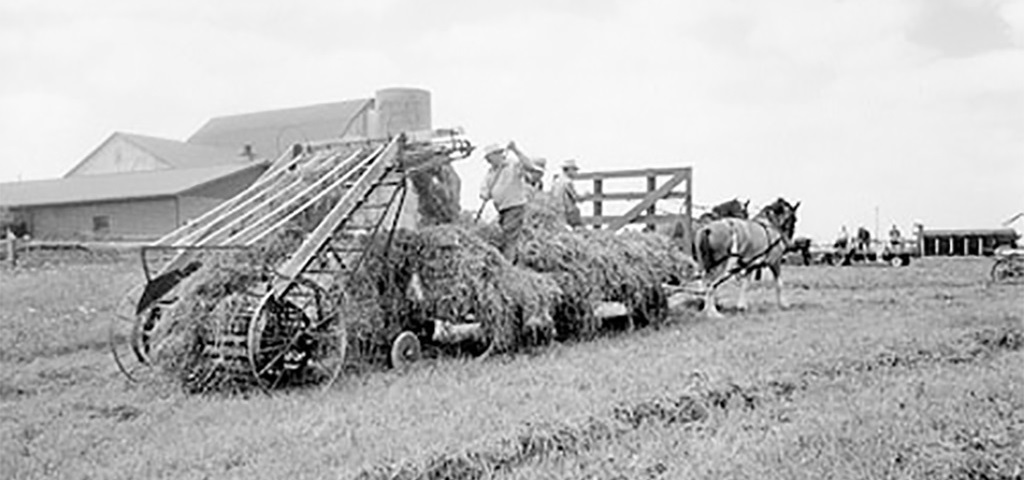
Farming in the 1800’s
Clearing, planting, organizing: settler and pioneer traditions
Loyalists and later waves of settlers expanded farming through intensive forest clearing. Early fields grew wheat, oats, potatoes, and garden crops; livestock roamed woodlots and stump pastures. As communities formed, so did agricultural societies and fairs, venues to share methods, show stock, and spread innovations. Ontario’s first agricultural society dates to 1792 at Niagara-on-the-Lake, and by the 1800s a province-wide fair culture helped knit rural Ontario together.
By the mid- to late-19th century, Ontario underwent a significant shift toward dairying. Cheese factories appeared across the countryside, transforming perishable milk into exportable Cheddar and anchoring new rural economies. The trend reflected both market opportunities and agronomic realities: dairying fit well with mixed farms and pasture rotations, and it helped diversify beyond volatile wheat.
Crucially, education and research institutions emerged to accelerate improvement. The Ontario Agricultural College (OAC) was founded in 1874 and eventually became a core college of the University of Guelph, still a focal point for farm training, extension, and research. Field stations followed, including the Muck Crops Research Station at Holland Marsh in 1946, supporting vegetable production on reclaimed organic soils.
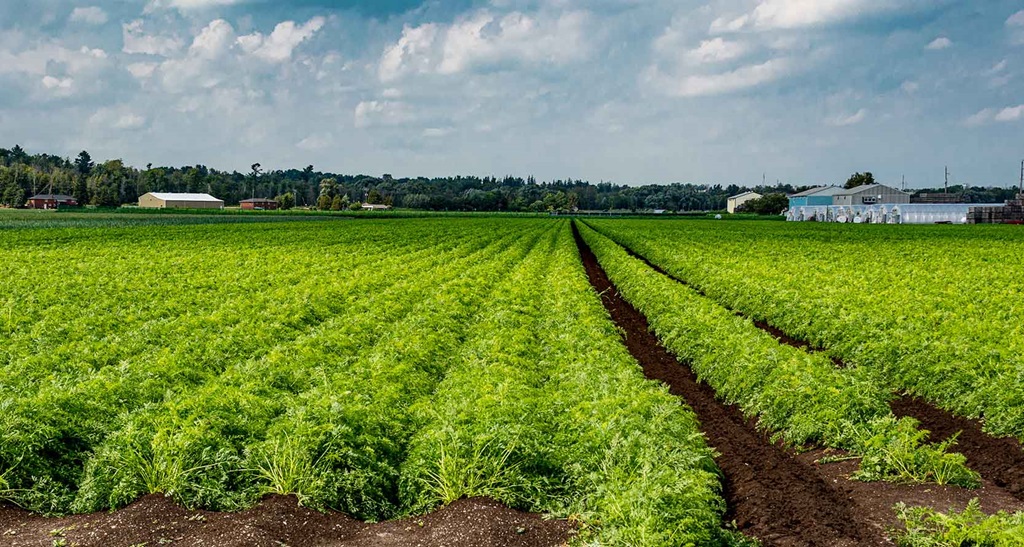
Holland Marsh
Tools of the trade: from handwork to horsepower to high-tech
Ontario farmers moved from hand tools and ox-drawn ploughs to horse-powered reapers and threshers, and by the early 20th century, to tractors that revolutionized fieldwork. Drainage and land shaping expanded what was possible. Beginning in the late 1800s, and continuing under modern legislation, tile drainage loans helped farmers afford subsurface drainage, raising yields and widening the window for timely field operations on heavy soils.
Regional specializations deepened as technology and infrastructure improved. The Holland Marsh, drained and diked in the early 20th century, became Canada’s “soup and salad bowl” for carrots, onions, and other vegetables. In the southwest, Leamington and Kingsville evolved into North America’s largest greenhouse cluster, producing tomatoes, cucumbers, peppers and more with highly automated, climate-controlled systems.
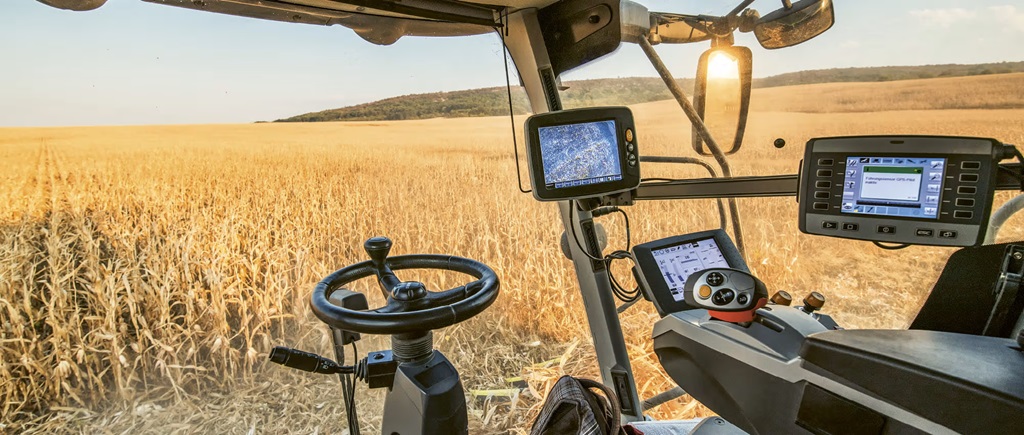
High-Tech Farming Tools
Precision, robots, and data: modern Ontario agriculture
Today’s Ontario farm is often a cockpit of screens and sensors. GPS-guided tractors steer straighter than any human, reducing overlap and fuel use; yield monitors log harvest data row by row; prescription maps feed variable-rate seed and fertilizer to match the field’s changing soils. These are the foundations of “precision ag,” and adoption has steadily advanced through on-farm trials and dealer-provided services across the province.
In the dairy sector, automation is especially visible. Robotic milking systems (often called AMS) allow cows to choose when to be milked and feed back real-time health and production data to farmers. Nationally, more than one in five dairy farms had adopted robotic milking by the 2021 Census, a dramatic rise over the past decade, with Ontario among the leaders. Research in Ontario has examined how robots affect labour, productivity, and farm finances, reflecting a broader shift toward data-rich, animal-centred management.
Drones (remotely piloted aircraft) add a bird’s-eye layer to agronomy, creating crop-health maps and spotting problem patches for targeted scouting. While Canada has not broadly authorized drone-applied pesticide spraying (PMRA and Transport Canada rules still limit it), interest is intense and regulations are evolving; for now, most farm uses centre on imaging, stand counts, and non-spray tasks.
Automation isn’t just in fields and parlours. Barns use smart ventilation, LED lighting, and automated feeders; orchards and packhouses deploy optical sorters; greenhouse ranges manage climate, irrigation, pollination, and crop work with tight control. The common denominator is measurement: the more precisely farms can measure conditions, the more precisely they can respond.
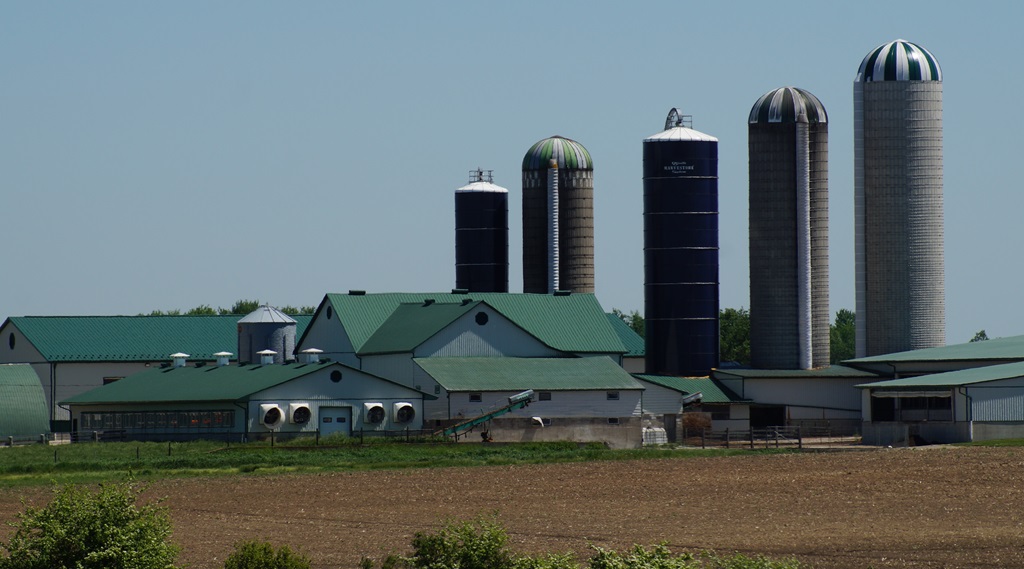
Modern Farm
Systems and markets that shape the farm
Ontario’s mix of crops and livestock reflects both climate and policy. Supply management, Canada’s system that balances domestic production with consumer demand in dairy, poultry, and eggs, has shaped the province’s dairy landscape for decades. Advocates argue it stabilizes farm income and consumer prices; critics say it raises costs and complicates trade. Whatever one’s view, it remains a defining feature of Ontario’s food system and a frequent subject in trade discussions.
Meanwhile, clusters outside the “big three” commodities continue to thrive. Tender fruit and wine grapes benefit from the Niagara Peninsula’s moderated Great Lakes climate; ginseng, introduced commercially in Norfolk County in the late 1800s, remains a notable specialty crop tied to export markets; and northern initiatives periodically revisit the potential of the Clay Belt’s glaciolacustrine soils, balancing promise with the reality of short seasons and distant markets.
Ontario farms also depend on people. Family labour, local employees, and seasonal agricultural workers from abroad keep operations running during peak periods. On the marketing side, direct-to-consumer channels, farm stores, CSAs, on-farm experiences, sit alongside traditional wholesale and processor relationships, giving farms multiple paths to reach eaters.
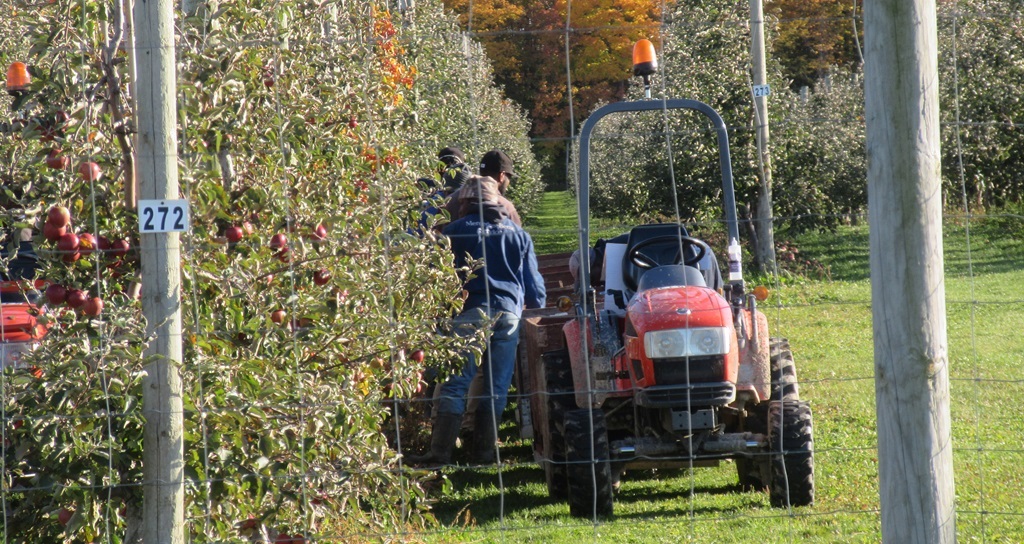
Farm Workers – Apple Orchard
Soil, water, climate: farming with the future in mind
Sustainability is no longer a sidebar, it is the operating manual. Ontario’s soil-health strategy promotes practices like reduced tillage, cover crops, diverse rotations, and careful nutrient stewardship that build resilience to droughts, floods, and wind. Farmers, commodity groups and researchers are testing and sharing what works across different soil types, from Windsor to Temiskaming.
Protecting the farmland base itself is equally urgent. Census data show Ontario has been losing farmland rapidly to development pressure, popularly summarized as an average of 319 acres per day over the 2016–2021 period, sparking calls for stronger land-use policy and easements to keep prime soils in production. The number is a wake-up call rather than a fait accompli, but it underscores how land, once paved, is hard to reclaim for food.
Water management will continue to be a competitive edge. Drainage investments that made yesterday’s heavy fields workable are now joined by controlled drainage, subirrigation, and real-time soil moisture sensing that help farmers ride out rainfall extremes. On the flip side, wetlands and riparian buffers, features familiar to earlier generations, are being re-valued for their roles in filtering nutrients and moderating floods.
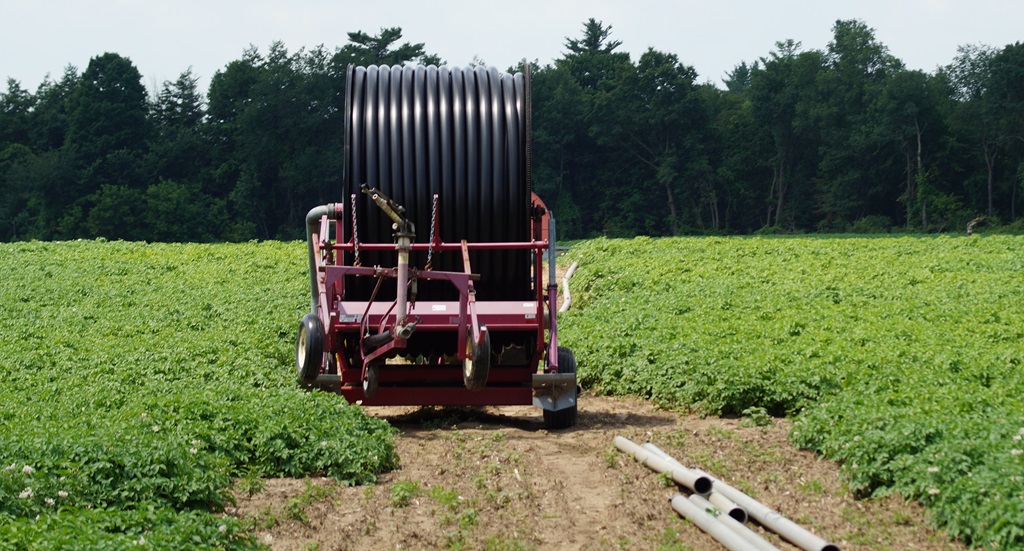
Installing Drainage
What makes Ontario’s farm story compelling
Three themes tie the centuries together.
First, collaboration. From longhouse gardens and shared rice beds to today’s co-ops, farm organizations, and extension networks, Ontario agriculture thrives when people pool knowledge. Agricultural societies and fairs seeded that culture early; colleges and research stations still amplify it.
Second, adaptation. The province’s mosaic of soils and microclimates invites specialization, Niagara’s tender fruit, the Marsh’s vegetables, greenhouse hubs in the southwest, and continuous tinkering with practices and varieties. Farmers have shifted with insects and markets before (the Cheddar boom is a classic example), and they’re doing it again with automation, data, and diversified marketing.
Third, stewardship. The most durable innovations often echo older wisdom: work with ecological processes, not against them. The Three Sisters model is essentially regenerative agriculture in pre-colonial form; cultural burning anticipates today’s fire-smart forestry; cover crops and rotations rebuild the soil our grandchildren will depend on.
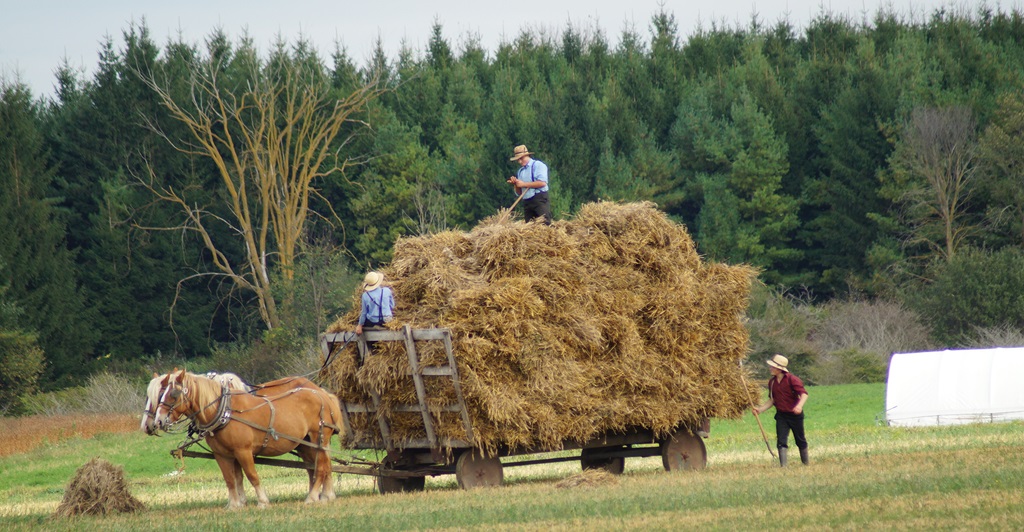
Mennonite Farming
The “Three Sisters” in farming (a quick, practical guide)
The “Three Sisters” is an Indigenous polyculture, most associated with Haudenosaunee and other peoples of the Eastern Woodlands, where corn, pole beans, and squash are grown together so each plant supports the others. You’ll also hear it called a guild or companion-planting method.
How it works (the ecology in plain language)
- Corn = the scaffold. Tall corn stalks act like living poles for climbing beans.
- Pole beans = the fertilizer factory. Beans host rhizobia that fix atmospheric nitrogen into forms plants can use, helping feed the trio over the season.
- Squash = the living mulch. Big, prickly leaves shade soil, suppress weeds, reduce evaporation, and discourage some pests.
Below the surface, the three have different root habits, so they share space rather than fight for it. Above ground, they occupy different “layers” (vertical stacking), which captures more sunlight per square metre than a single crop can.
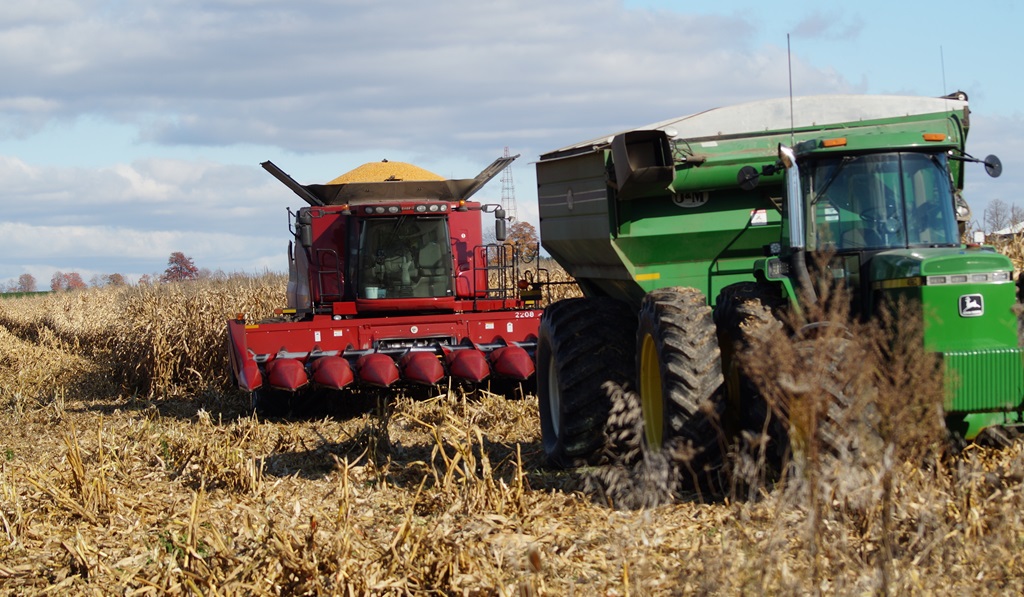
Harvesting
The road ahead
Ontario will keep farming through volatility, of climate, prices, and politics, because it’s built for resilience. Expect more autonomy (robots, AI decision support), more biological tools (biocontrols, pollinator-friendly systems), and more circular thinking (nutrient recycling, low-carbon fuels), all grounded in the same pragmatic question that has guided growers here for centuries: what works, on this soil, with this weather, for these people?
Answering that question takes both memory and measurement. Fortunately, Ontario agriculture has never been short on either.
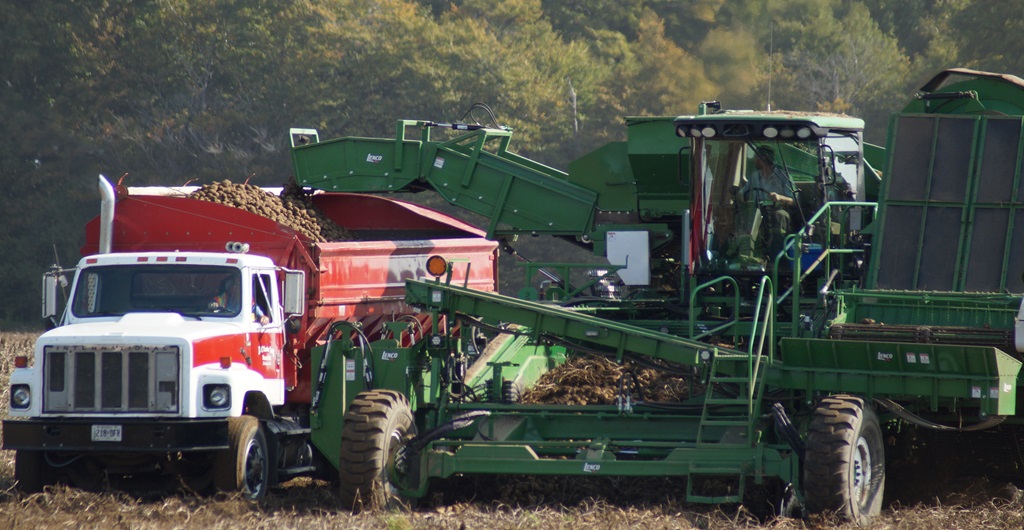
Potato Harvesting