
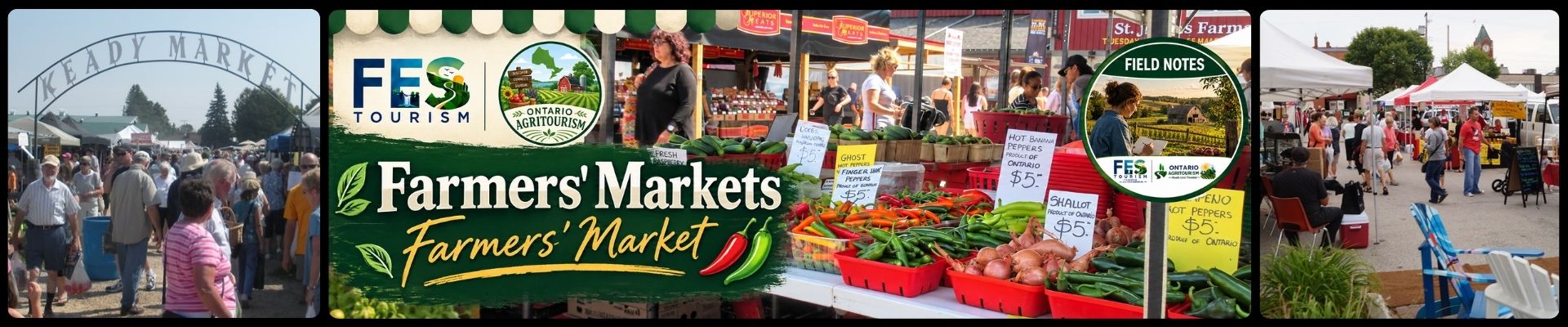









Farmers’ Markets in Ontario
Where Community, Culture, and Local Food Meet
Walk any Ontario main street on a Saturday morning from May to October and you’ll likely stumble into a small miracle: neighbours greeting neighbours, toddlers with juice-stained chins, and tables piled high with just-picked strawberries, maple butter tarts, and tomatoes that smell like summer. Farmers’ markets feel timeless, and in Ontario, that’s almost true. They’re among our oldest civic institutions, they’ve adapted through booms and busts, and today they’re central to how communities feed themselves, support local farms, and define their identity.
This article traces how markets began here, why they still matter, how residents can support both their markets and their agricultural fairs, and what’s going on when municipal councils tighten rules or pull back funding. Spoiler: smart collaboration beats red tape every time.
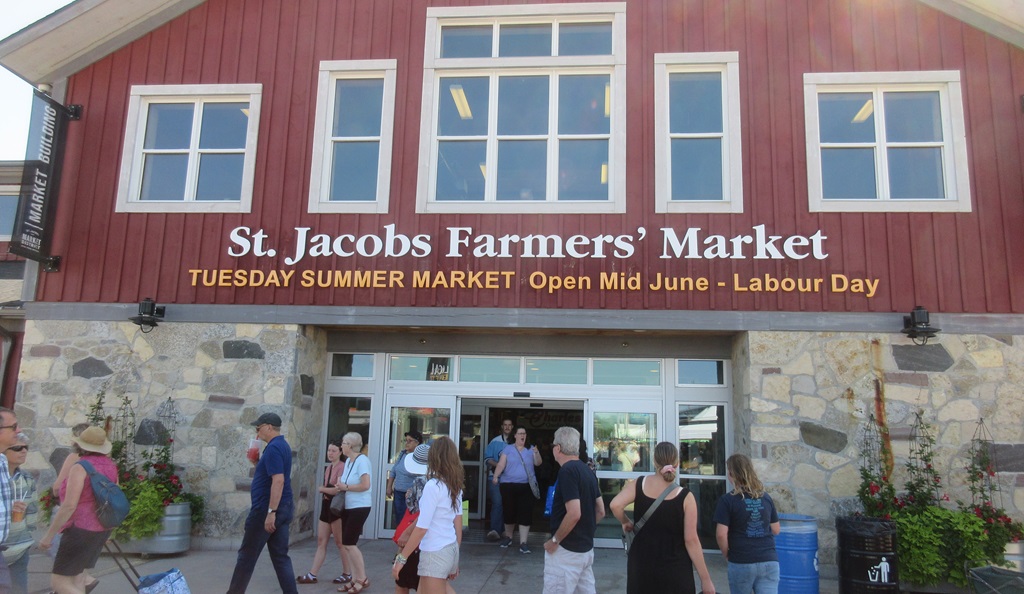
St. Jacobs Farmers’ Market
From market squares to modern pop-ups: a (very) short history
Ontario’s market story begins in the early 1800s. Kingston’s Public Market launched in 1801, a gathering place that has operated in the city’s Market Square for more than two centuries and is often cited as Ontario’s oldest continuous market.
A couple of years later, York (now Toronto) formally designated a public market site. In 1803, Lieutenant-Governor Peter Hunter proclaimed a weekly market day and set aside land that evolved into today’s St. Lawrence Market, still a hub for farmers and food lovers alike.
By the mid–19th century, market squares were standard civic infrastructure, Hamilton’s market dates to 1837, Kitchener’s to the 1860s, and dozens more took root as towns incorporated. The pattern was simple: give farmers a predictable place to sell and townspeople a reliable place to buy.
After a lull in the 1970s–80s as malls and supermarkets rose, Ontario saw a renaissance of community markets. In 1991, Farmers’ Markets Ontario (FMO) formed to organize, support, and advocate for markets; today it represents 180+ markets and reports sizable economic benefits from the local food economy.
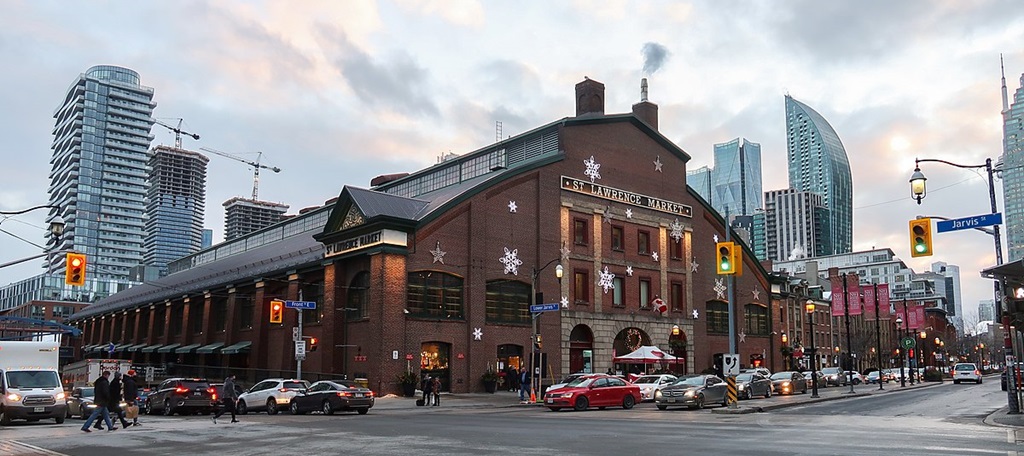
Old Farmers’ Market (St. Lawrence)
Why markets matter (far beyond groceries)
Ask ten people why they shop at farmers’ markets, and you’ll hear ten answers: taste; freshness; fewer “food miles”; knowing the person who grew your carrots. The benefits stack up.
Local economic boost. FMO’s studies have consistently found substantial impacts. Earlier analyses estimated the province-wide effect in the hundreds of millions to over a billion dollars, while more recent FMO summaries peg annual market sales around $800 million with a total economic impact above $2.5 billion, money that turns over in nearby shops, payrolls, and services.
Stronger farm businesses. Direct sales help small and mid-sized producers keep more of the retail dollar, test new products, and diversify risk. Networks like the Greenbelt Farmers’ Market Network (spanning 85+ markets across southern Ontario) also share marketing and logistics tools that reduce overhead for farmers.
Community health and food literacy. Markets are open-air classrooms. Children learn what grows here and when; adults swap recipes and preservation tips. Nutrition incentive pilots and “market voucher” initiatives explored in Ontario have helped low-income families access fresh produce while supporting local vendors—an approach used across Canada and beyond.
Civic identity and tourism. Market days animate downtowns, feed nearby cafés, and give visitors a place to start their day. When your market thrives, so do the neighbouring bakeries, bookshops, and patios.

Greenbelt Farmers’ Market
Markets and fairs: two sides of the same rural-urban handshake
It’s no accident that many of Ontario’s best markets sit on fairgrounds or are run by, or in partnership with, agricultural societies. Agricultural fairs build public understanding of farming; markets turn that understanding into weekly purchasing habits. Both are often championed by the same volunteers and supported by the Ontario Association of Agricultural Societies (OAAS) and Ontario’s agriculture ministry through various programs over time.
When communities support their markets, they often strengthen their fairs, and vice versa.
Ontario Association of Agricultural Societies
How your community can support its market (and its fair)
You don’t need to be a farmer to help. Here’s a pragmatic playbook that any resident, BIA, or service club can use:
- Shop with intention. Make market day part of your weekly routine during the season. Spending shifts the needle: each bag of produce supports a farm, a stall fee, and secondary spending downtown. (FMO and the OFA recently partnered again to promote “buy local” campaigns precisely because they work.)
- Volunteer where it counts. Markets succeed on logistics: setup crews, traffic marshals, social media, data collection. Ask the market manager for the two tasks they can never fill, then fill them. FMO’s “start a market” guidance shows how volunteer capacity underpins long-term stability.
- Champion access. Back local efforts to provide market vouchers or matching dollars for families who need them and help your market connect with community health organizations that run such programs.
- Collect data, tell stories. Count visitors, map postal codes, and track vendor sales ranges (aggregated). Those numbers help councils see markets as economic drivers rather than “nice-to-have” events. FMO’s impact work demonstrates how persuasive credible data can be.
- Show up at budget time. Speak at council, write to your mayor and councillors, and ask for predictable, multi-year support: road-closure help, in-kind services, modest marketing grants, and clarity on permits. OFA’s municipal guide is a practical primer on working productively with local government.
- Connect markets to fairs. If your agricultural society runs the fair, invite the market to host “harvest previews” or cooking stages; if the market runs separately, help the fair sell advance tickets or spotlight 4-H and homecraft exhibits on market day. (OAAS resources can help build those partnerships.)
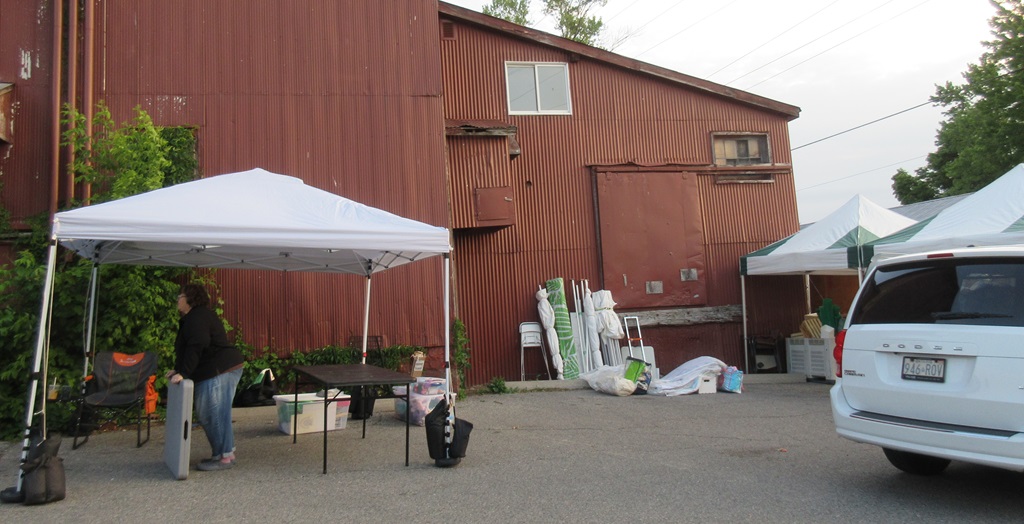
Farmers’ Market Volunteer
So why do some councils tighten rules or cut support?
Most municipal councillors aren’t anti-market or anti-fair. They’re navigating risk, budgets, and competing demands. Typical reasons you’ll hear:
1) Food safety and public health obligations. Ontario’s Food Premises Regulation (O. Reg. 493/17), along with local health unit requirements, sets rules for temporary food premises. Vendors often must notify the health unit, document handling practices, and meet equipment standards. Those protections are important, but for small vendors they can feel daunting without clear guidance.
2) Liability and risk management. Municipalities carry insurance exposure for events on public property. Cost-recovery policies for staff time (traffic control, barricades, inspections) and permits are common, and the Municipal Act, 2001 explicitly authorizes cities to impose fees and pass by-laws governing markets and events.
3) Event and road-use costs. Road closures, parks use, and right-of-way permits often come with set fees. These can add up quickly for volunteer-run organizations if municipalities don’t provide in-kind support or waivers, especially when cost-recovery models are applied broadly. Examples from York Region road-use permits and several municipal fee schedules show how costs are structured.
4) Competing policy goals. Noise bylaws, equity of access to public space, downtown construction timelines, and staff capacity all affect scheduling. In some places, councils rationalize support by shifting from direct subsidies to competitive grant programs, or by replacing legacy in-kind services with fee schedules to “treat everyone the same.”
5) Unclear definitions of a “farmers’ market.” Debates sometimes flare over resellers, prepared foods, or urban agriculture vendors. A long-standing policy discussion in Toronto, for instance, argued against rigid percentage rules for who counts as a “farmer,” urging flexibility to reflect local conditions.
In short: tight budgets, standardized processes, and risk aversion can unintentionally squeeze the very community institutions residents value most.
Farmers’ Markets Ontario
Does pulling back help—or hurt—the community?
The case for stricter rules and cost recovery:
Councils will say consistent fees avoid accusations of favouritism, protect taxpayers from subsidizing private activity, and ensure minimum safety standards. There’s logic here, and nobody wants foodborne illness or unmanaged traffic.
The case for balanced support (and why it usually wins):
When councils overcorrect, by piling on fees, limiting sites and hours, or eliminating in-kind services without a transition, markets shrink or fold. That’s not just sentiment. Ontario impact studies show large, province-wide benefits from markets; even modest declines risk downtown foot traffic, vendor incomes, and spillover spending. Meanwhile, provincial and sector bodies are doubling down on buy-local promotion because it pays community dividends.
Fair organizations face similar dynamics. Agricultural societies deliver year-round programming, maintain fairgrounds used as emergency staging areas, and preserve a community’s rural heritage. The OAAS highlights their public-benefit mission, and the province has offered targeted programs to support societies and encourage agricultural education over the years. Cutting municipal support for these groups can weaken exactly the community assets councils say they want to strengthen: economic development, youth engagement, and cultural vibrancy.
Bottom line: reasonable, risk-based rules help. Blanket restrictions and abrupt withdrawal of services hurt, not only the market or fair, but main-street businesses, local farms, and the community’s sense of place.
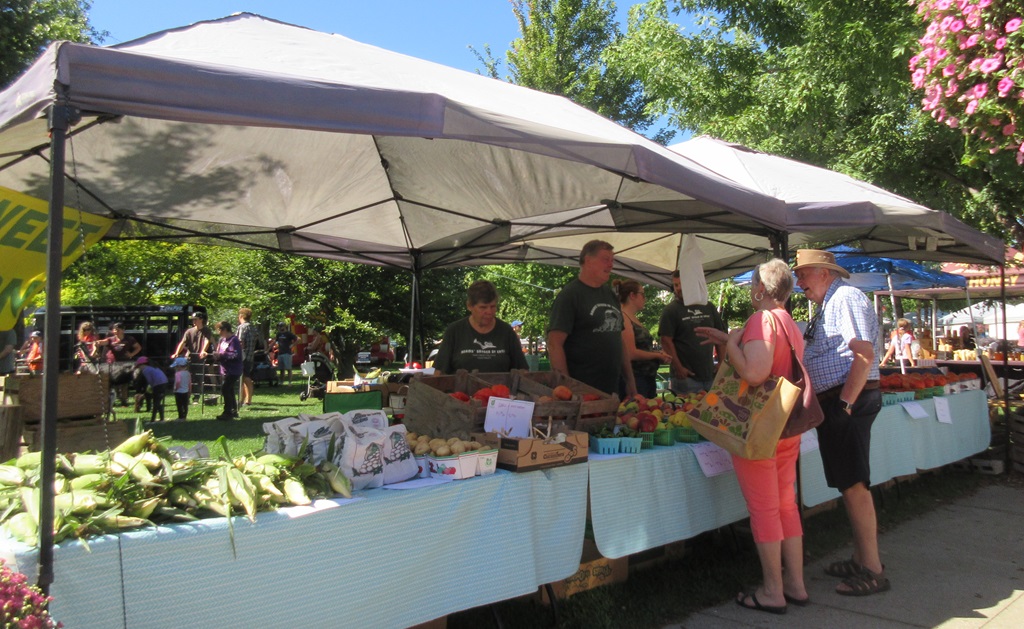
Couple enjoying an Ontario Farmers’ market
A practical path forward: what good collaboration looks like
Communities that get this right follow a few shared principles:
1) Clear, right-sized rules.
Public health requirements should be communicated with templates, checklists, and seasonal vendor sessions. Several health units publish plain-language guidance and permit options, single-event or annual, which reduce friction for vendors and organizers.
2) Predictable, transparent fees—paired with in-kind support.
Markets and fairs can budget if they know costs in advance. Councils can keep cost-recovery frameworks and still waive or offset fees for events that demonstrably drive foot traffic, tourism, or rural-urban connection. Local fee schedules and event manuals illustrate how to codify this balance.
3) Data-driven budgeting.
Require (and help collect) visitor counts, vendor surveys, and spending estimates. FMO’s impact work shows why those numbers matter; markets can use volunteer “dot maps” and short QR-code surveys to generate credible evidence.
4) Multi-year agreements.
One-year approvals keep everyone on edge. Three-year MOUs between the municipality, the market, and (when relevant) the agricultural society give stability while enabling annual safety reviews.
5) Leverage provincial and sector programs.
Tap FMO resources (manager training, risk management templates), OFA’s municipal toolkit, and regional networks like the Greenbelt Farmers’ Market Network. Coordinated promotion dollars stretch farther.
6) Link market seasons and fair calendars.
Use spring markets to preview fall fairs; use fair weeks to amplify peak harvest. Cross-promotions help both organizations reach new audiences, particularly families discovering local food for the first time. (OAAS and OMAFRA program pages outline roles and funding streams that can support these partnerships.)
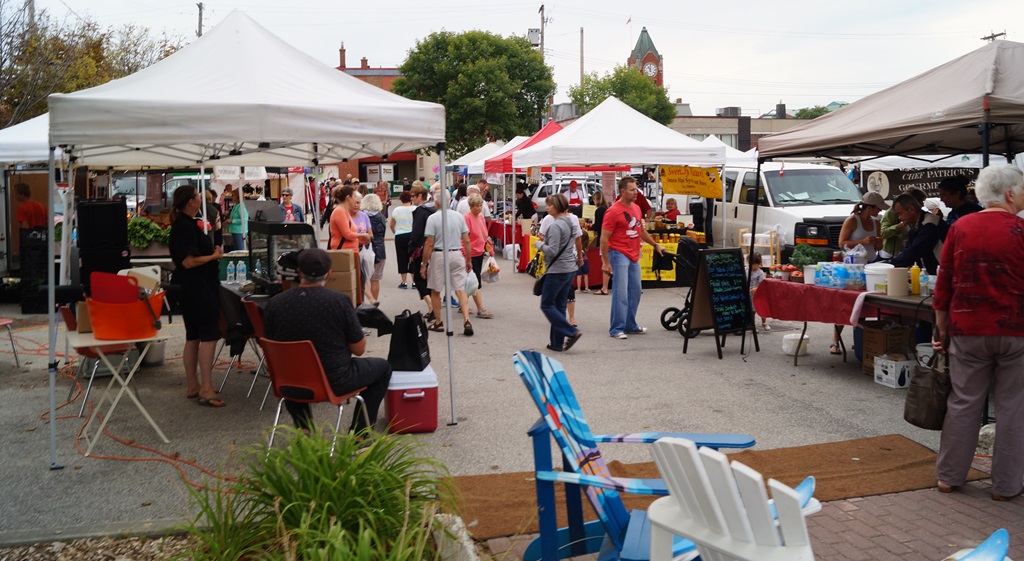
Crowded Farmers’ Market
What residents can ask of their council—starting this month
If you’re a market shopper, vendor, or fair volunteer, consider advocating for:
- A standing market site plan (with power access, washrooms, and safe pedestrian flow) approved once, refreshed annually.
- A published fee schedule for events on public property, plus a policy that waives or offsets fees for designated “community-economic-development events” like markets and fairs. Ontario’s Municipal Act allows fees; it also allows councils to design fair exceptions.
- A simple public health pathway (seasonal vendor orientation + checklists) agreed with the local health unit.
- Modest marketing grants and staff liaison support, leveraging OFA/FMO promotions so local dollars go further.
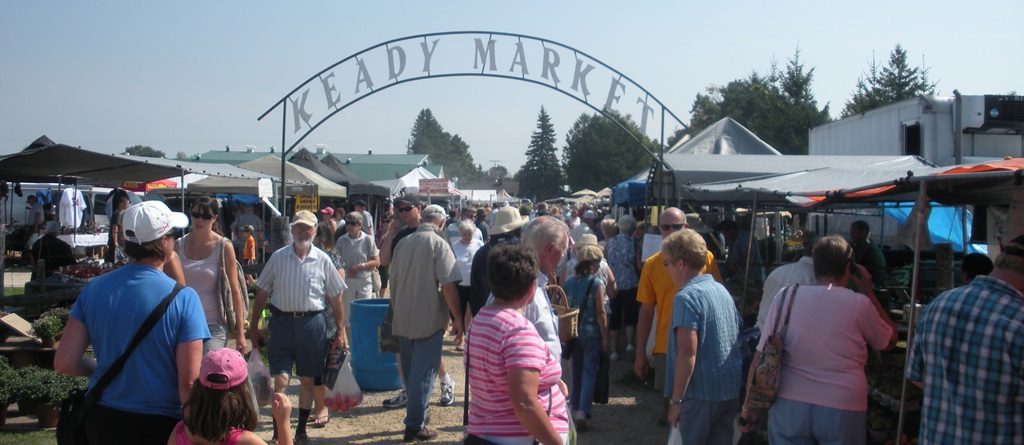
Keady Farmers’ Market
The heart of it
Farmers’ markets and agricultural fairs are not nostalgia acts. They’re living infrastructure for local economies and culture, just like libraries, trails, and arenas. Markets put names and faces back into our food system. Fairs teach the next generation that food starts in a field, not a warehouse.
When municipalities partner with markets and agricultural societies, by scaling rules to risk, providing predictable support, and measuring outcomes, everyone wins: farmers, small businesses, families, and the public purse. When councils default to blanket fees and rigid restrictions, they often end up paying more in lost vitality than they save on a line item.
Ontario’s markets have been doing this work since 1801. They know how to deliver. All they need is a clear lane and a little wind at their back.
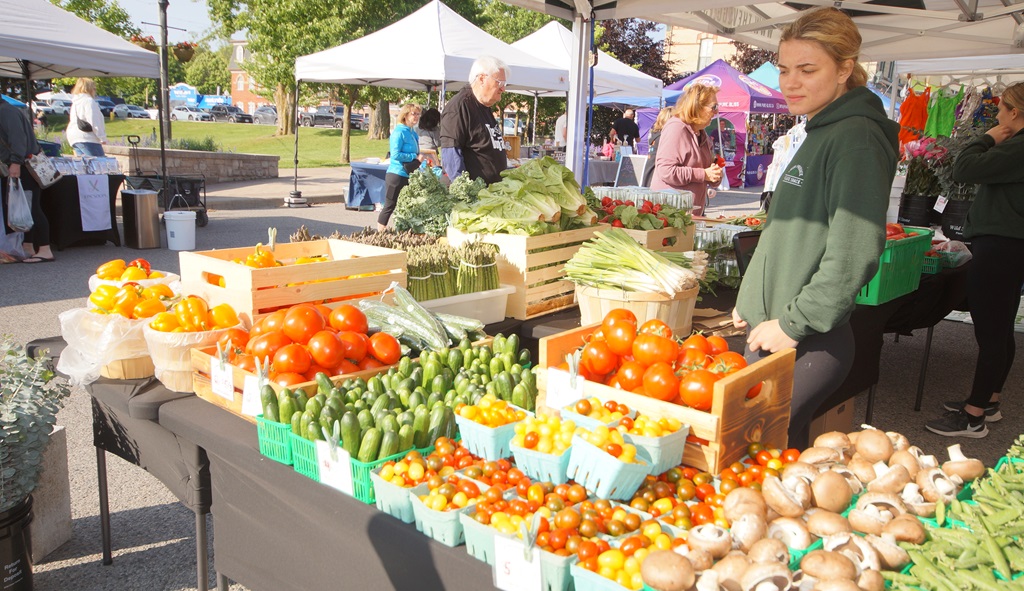
Crowded Farmers’ Market