









A Road Less Traveled: Ontario’s Backroad Field Guide – Part Three
Ontario’s concessions and side roads are quiet museums. Some exhibits still host potlucks; others are fading into grass and lichen. Here’s how to read five common “memory keepers” without leaving the shoulder.
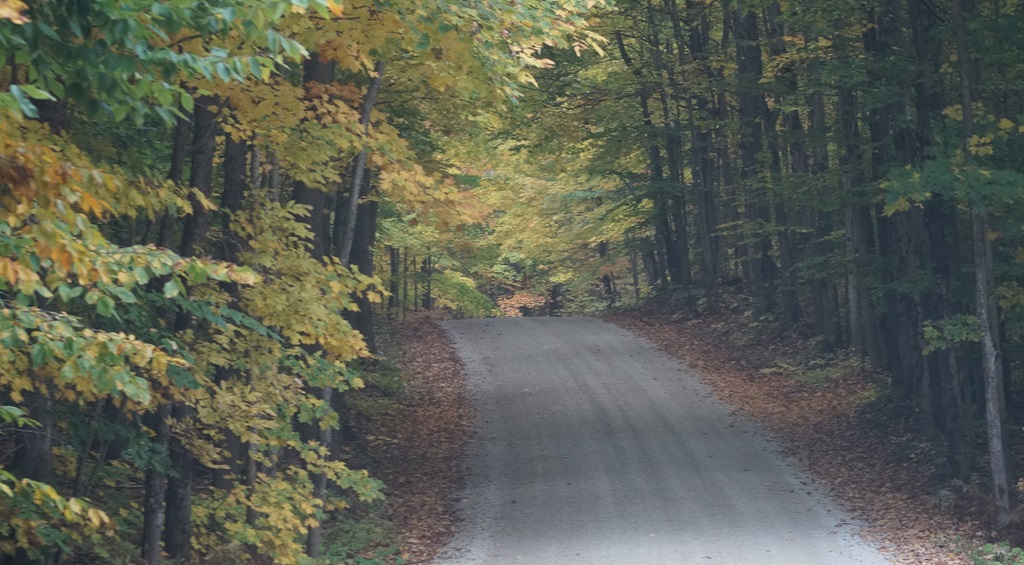
“A Road Less Traveled”
1) Small Rural Community Halls
A hall is a Swiss Army knife for country life, meeting room, dance floor, polling station, euchre night, 4-H awards, bridal shower, chili cook-off. Many began as township halls, Orange or Oddfellows lodges, Women’s Institute halls, or simple purpose-built community centres.
What you’re seeing: Modest clapboard or brick buildings with symmetrical fronts, a short flight of steps, and a signboard or notice case. Look for flagpoles, war memorial plaques, and accessible ramps added later. Parking is usually gravel; hydro lines often run to a side meter.
Why they matter: They’re social engines that outlast trends and tech, spaces where neighbours meet face-to-face. Even when bookings ebb, a hall anchors identity for a spread-out district.
Roadside clue: A sandwich board advertising a fish fry or craft sale = still thriving. Fresh metal roofing and new windows hint at recent grants or volunteer fundraisers.
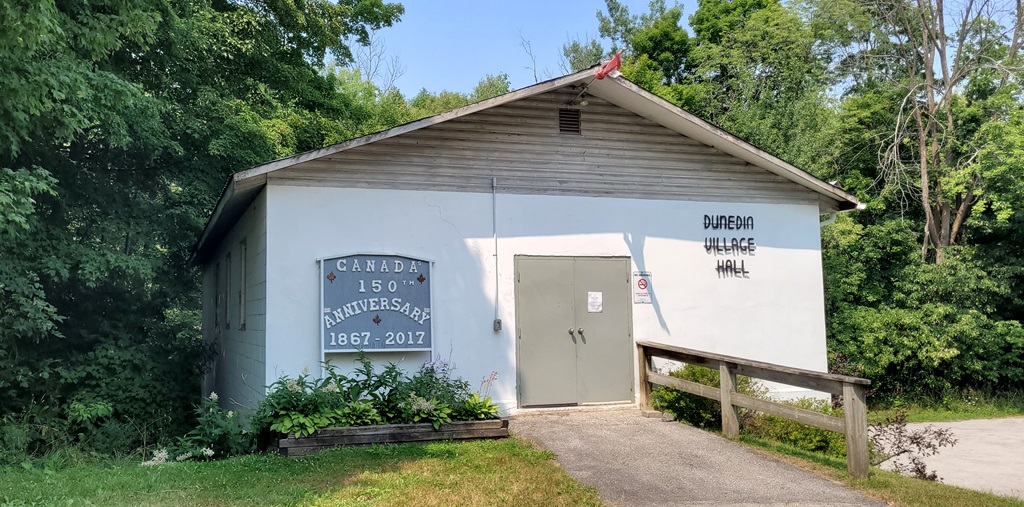
Dunedin Village Hall
2) Forgotten Cemeteries
Scattered across fields and fencerows are pioneer family plots and early community burying grounds. Travel by horse demanded local cemeteries; later, consolidation and road realignment left some stranded at field edges.
What you’re seeing: A rectangle of lilacs or yews, a low iron fence, or a cluster of leaning stone markers in a copse. You may spot a small municipal sign reading “Pioneer Cemetery.” Stones range from hand-carved limestone to polished granite, with willow motifs, clasped hands, or lambs for children.
Why they matter: They’re time capsules of settlement patterns, epidemics, naming traditions, and languages. They also remind us that today’s hayfields were once home lots and hamlets.
Roadside clue: Mown grass and upright stones suggest an active caretaking arrangement; waist-high grass and slumped markers signal a site at rest.
Etiquette: View from the boundary unless there’s a public entrance; cemeteries are protected spaces, don’t climb fences, rub stones, or share precise locations of fragile sites online.
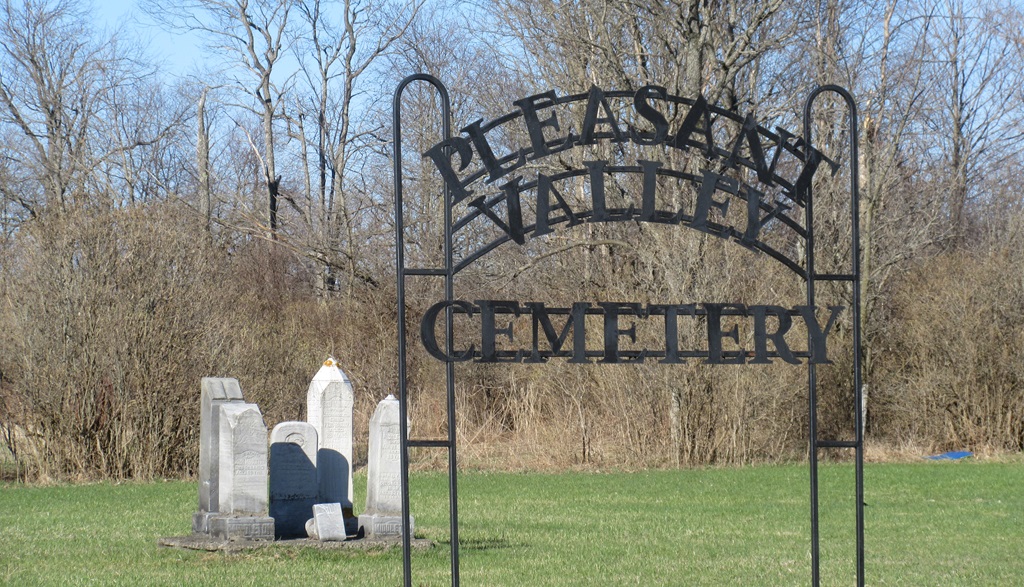
Pleasant Valley Historic Cemetery
3) Discarded Farm Equipment, Trucks, and Cars
A combine half-swallowed by goldenrod or a pickup with a sapling through the cab isn’t always “junk.” In rural economics, parked machinery can be a parts bank, a snow fence, a weight for silage covers, or simply yesterday’s workhorse retired close to home.
What you’re seeing: Sunburnt paint, obsolete logos, and missing panels where useful pieces were salvaged. Vehicles may sit along stone rows (easiest place to push them) or near old shop sites. Implements, binders, hay rakes, one-bottom plows, signal the farm’s former focus.
Why they matter: They chart technology shifts, from horses to PTO to GPS, and the boom-bust cycles of crops and prices. For wildlife, these hulks can be micro-habitats; for artists and photographers, irresistible textures of rust and lichen.
Roadside clue: Fresh tire marks to the site mean “active salvage”; a tree growing through a frame means decades.
Etiquette: Admire but don’t enter or remove anything; farmyards and fencerows are private workplaces with hazards you can’t see.
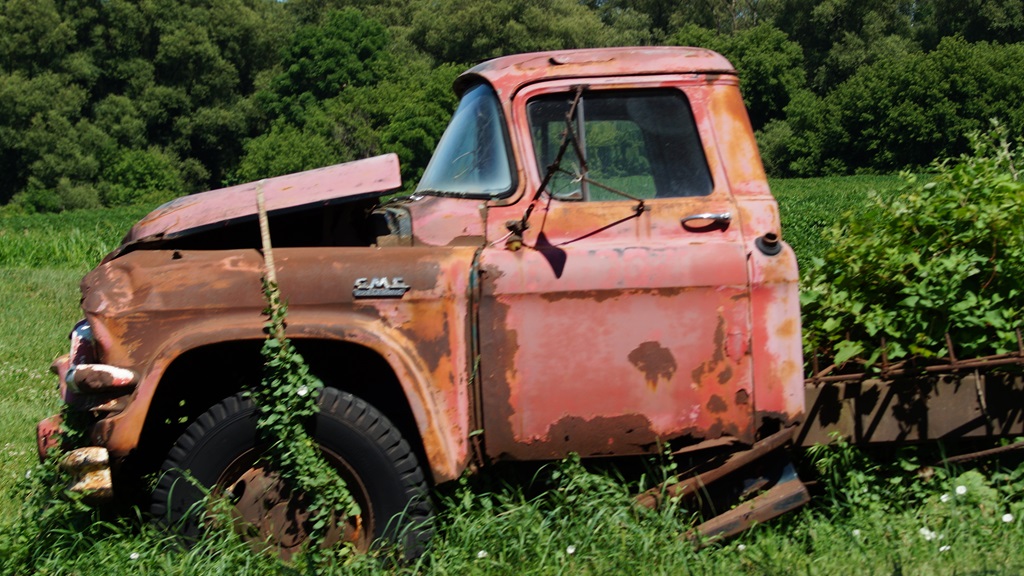
Old Farm Truck
4) High Bird Nests & Caterpillar Webs
Look up and the story gets lively. Big stick nests, leafy hideaways and ghostly webs are seasonal headlines along Ontario’s backroads.
What you’re seeing (nests):
- Osprey platforms: Square wooden trays on hydro poles or dedicated posts, crowned with neat stick nests, fish hawks using human-made towers.
- Hawk nests: Large, messy stick bowls wedged high in hardwood crotches, often Red-tailed or Broad-winged.
- Heronries: Several bulky nests clustered in dead trees over swamps, colonial nesting of Great Blue Herons.
- Chipmunk tree shelters: Occasionally, Eastern Chipmunks can be spotted using natural tree cavities or hollow trunks as temporary refuges or food storage sites. While they usually live in underground burrows, these elevated hideaways can surprise observant travelers.
What you’re seeing (webs):
- Eastern tent caterpillar: Silken tents in crotches of cherries and apples in spring.
- Fall webworm: Big gauzy bags at the tips of branches in late summer and early fall.
Why they matter: Raptor and heron nests signal healthy waterways and hunting grounds, while tree cavities provide shelter for many small mammals and birds. Caterpillar cycles feed birds and shape roadside trees. Most webbing looks dramatic but is temporary, and trees usually rebound.
Roadside clue: An occupied osprey nest often comes with whitewash streaks on the pole and regular “circuits” as adults patrol a nearby lake or river. Tree cavities with scattered nutshells beneath them may indicate a chipmunk or squirrel has been busy.
Etiquette: Keep your distance; never approach nests on private land, and don’t disturb nesting colonies or wildlife with drones.
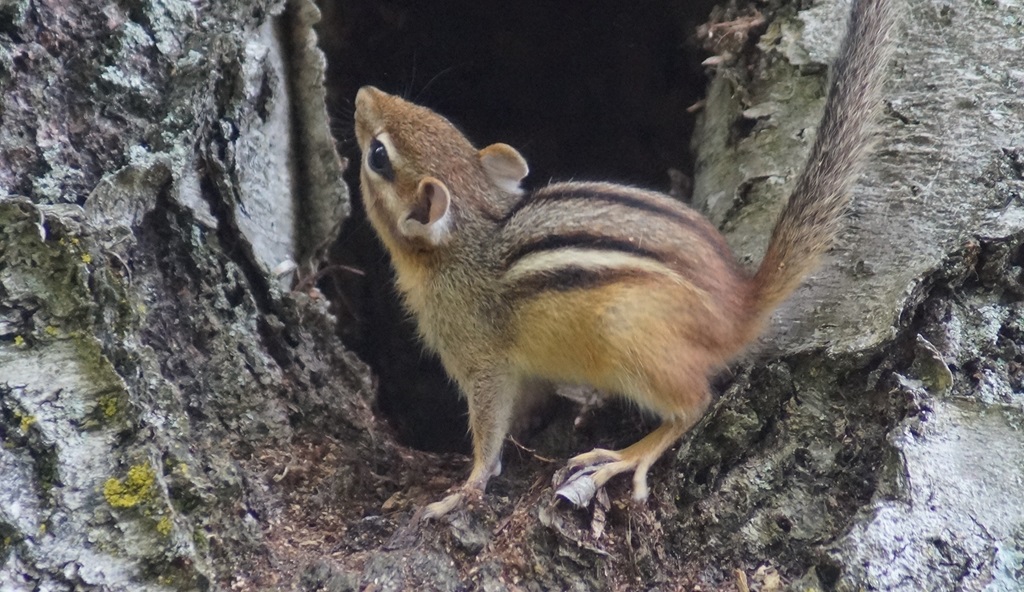
Chipmunk “Nest” Hideaway
5) Decaying Barns & Stone Foundation Remains
Not every empty barn fell to neglect; sometimes the farm’s work moved to a bigger steel shed, or the herd left and maintenance no longer pencilled out. When the timber frame finally goes, the stone cellar walls often linger like the footprint of a ship.
What you’re seeing: Sun-bleached siding, missing boards, swayback roofs, and open haymow doors. Stone foundations reveal ramped “bank barns,” with lower-level stabling and upper-level hay storage. Nearby, you may find concrete silos or tile piles, clues to the farm’s era and enterprise.
Why they matter: Barns are folk engineering at grand scale, mortise-and-tenon joinery, local stone, and community barn raisings. Their remains are landmarks in the cultural landscape and habitat for swallows, owls, and bats.
Roadside clue: Fresh cables or braces suggest a stabilization effort; new steel cladding on an old frame hints at adaptive reuse.
Safety note: Ruins are unstable, admire from afar, especially after wind or heavy snow years.
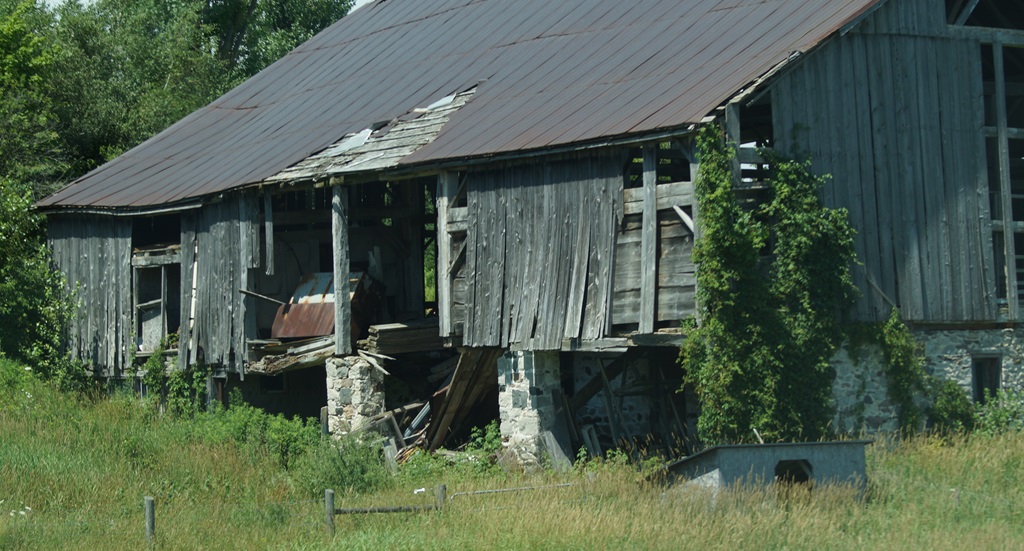
Decaying Old Barn
Universal Roadside Etiquette
- Stay on public rights-of-way; never block laneways or field gates.
- Photograph respectfully, avoid faces, license plates, and exact locations for fragile sites.
- Pack out what you pack in; leave stones, fences, and flowers as you found them.
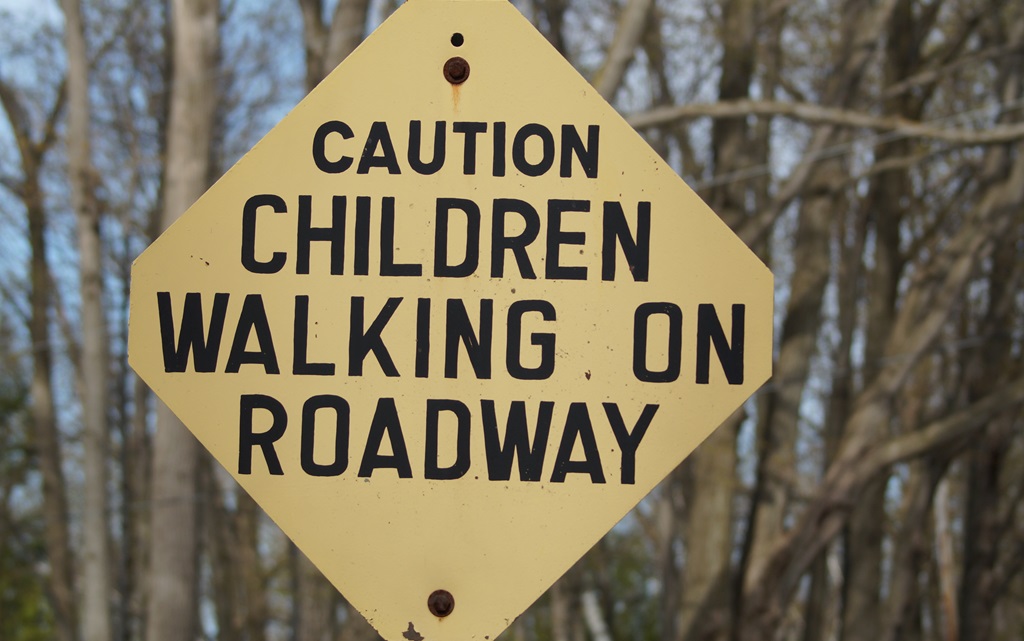
Caution Sign – “Children Walking on Roadway”