



















About the Fair
A National Tradition Celebrating Innovation, Agriculture, and Canadian Heritage Since 1879
The Canadian National Exhibition (CNE), operated by the Canadian National Exhibition Association, is one of Canada’s oldest and most storied annual exhibitions. Established in 1879, the CNE has grown from a regional agricultural fair into a nationally recognized celebration of Canadian achievement, cultural expression, and community heritage.
Origins Rooted in Agriculture & Innovation
The CNE began as the Toronto Industrial Exhibition, created to promote agriculture, manufacturing, and new inventions in a rapidly growing Canada. Farmers, craftsmen, inventors, and businesses gathered to showcase their work, exchange knowledge, and celebrate national growth.
Agriculture played a defining role in early exhibitions. Livestock competitions, produce displays, plowing demonstrations, and homecraft competitions reflected a country built on farming and rural communities. These agricultural roots remain a cornerstone of the CNE’s heritage.

A Showcase of National Progress
Beyond agriculture, the CNE quickly became a platform for technological advancement and Canadian innovation. Over its long history, the fair has celebrated:
- National manufacturing
- Science and engineering achievements
- Industrial progress
- Public institutions
- Cultural exhibitions
- Crafts, arts, and domestic arts
Companies and governments frequently used the exhibition to unveil new technologies, demonstrate modern systems, and highlight advancements shaping the nation.
A Meeting Place for Communities Across Canada
From its earliest days, the CNE served as a gathering point for Canadians from all regions. Agricultural societies, exhibitors, service clubs, youth groups, and community organizations travelled to Toronto to participate in the country’s largest annual exhibition.
This national-scale gathering helped strengthen community bonds and foster a sense of shared identity during periods of tremendous change, including Canada’s industrial expansion, world wars, and the development of a modern urban nation.

Youth Engagement & Learning Through Generations
Youth have long been central to the CNE’s mission. School programs, youth competitions, and agricultural education have helped young people develop:
- Leadership
- Creativity
- Public speaking and demonstration skills
- Agricultural literacy
- Appreciation for Canadian heritage and innovation
Generations of Canadian families recall participating in these programs, many of which still echo through today’s exhibitions.
Organized Through Strong Leadership & Volunteerism
The CNE’s success has been built on the leadership of the Canadian National Exhibition Association, local agricultural societies, community organizations, and thousands of volunteers. Over more than a century, their shared commitment has kept the exhibition relevant, historically grounded, and culturally meaningful.
These dedicated individuals have contributed to planning, heritage preservation, agricultural competitions, archival maintenance, and the continuation of longstanding traditions.

A Reflection of Canada’s Identity
Few events have mirrored Canada’s growth as closely as the CNE. Its legacy encompasses:
- Agricultural roots
- Technological progress
- Cultural diversity
- Community involvement
- National unity
- Historical preservation
The CNE remains one of the most significant annual events in the country, a celebration of the people, progress, and heritage that define Canada.
A Tradition That Continues to Inspire
While the world around it has changed dramatically, the Canadian National Exhibition continues to honour the traditions, values, and innovations that shaped its beginnings. Its unique blend of agriculture, culture, history, and community connection ensures the CNE will always hold a meaningful place in Canadian life.

About the Exhibition Place
Exhibition Place & Toronto’s Western Waterfront: A Historic Campus Where Innovation, Heritage & Community Meet
Located along Toronto’s western waterfront, Exhibition Place is one of Canada’s most iconic event campuses, a landmark district where history, architecture, and community tradition converge. While Toronto is one of North America’s largest cities, Exhibition Place remains a unique cultural space that preserves more than a century of Canadian heritage.
A Site with Deep Historical Roots
The grounds that now form Exhibition Place were first used for exhibitions in the late 19th century, when Toronto hosted agricultural fairs, industrial demonstrations, and early public gatherings along the lakeshore. In 1879, the site became home to the Toronto Industrial Exhibition, the event that would later evolve into the Canadian National Exhibition.
Over the decades, the campus expanded with grand buildings, monuments, and public spaces designed to host national-scale events. Many of these heritage structures still stand today, representing an architectural timeline of Canadian innovation.

A Waterfront Setting Rich in Heritage & Identity
Exhibition Place sits on Toronto’s shoreline — a landscape shaped by both natural beauty and urban development. The area features:
- Panoramic lake views
- Historic gates and monuments
- Wide boulevards and tree-lined avenues
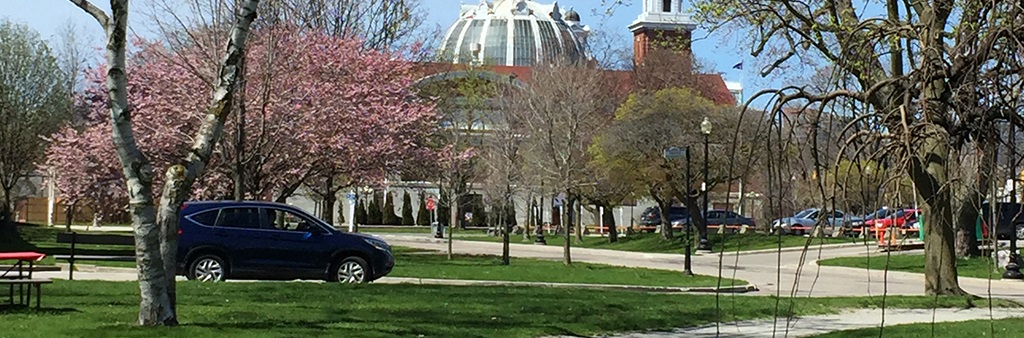
- Open greenspaces and walking paths
- Iconic heritage buildings
This blend of openness and heritage creates a campus atmosphere unlike anywhere else in the city.
A District Shaped by Agricultural & Industrial History
Although Toronto itself has grown into a major metropolitan centre, the history of Exhibition Place is deeply connected to rural traditions. In its early decades, the grounds hosted:
- Livestock shows
- Produce competitions
- Field and crop displays
- Domestic arts exhibitions
- Rural demonstrations and community exhibits
These agricultural foundations helped shape the identity of the site, linking it closely to communities across Ontario.

A Place Where Culture & Community Meet
Beyond its agricultural origins, Exhibition Place has long served as a gathering point for Toronto’s diverse communities. The district has been home to:
- Public exhibitions
- Cultural celebrations
- Educational programs
- Heritage festivals
- Community events
- National and international showcases
The campus continues to be a place where Torontonians and visitors come together to explore, learn, and celebrate shared experiences.
A Living Museum of Architecture
Exhibition Place contains one of Toronto’s most impressive collections of heritage architecture, representing styles from the late 1800s through the mid-20th century. Buildings such as:
- Government Building (now Medieval Times)
- Arts, Crafts, and Hobbies Pavilion
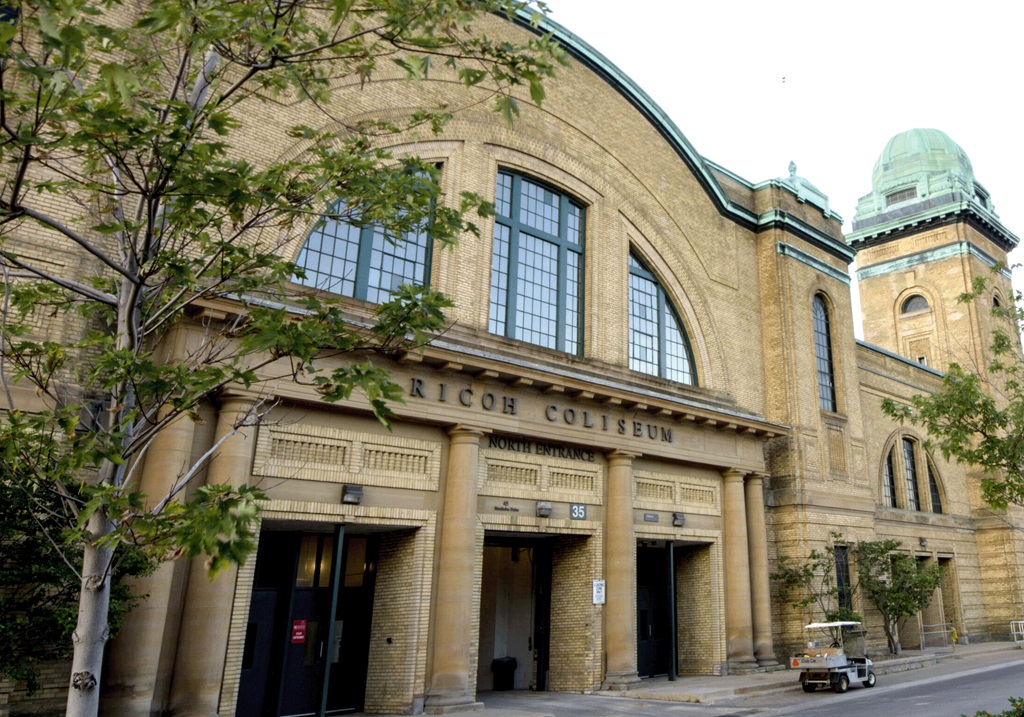
- Coliseum Complex
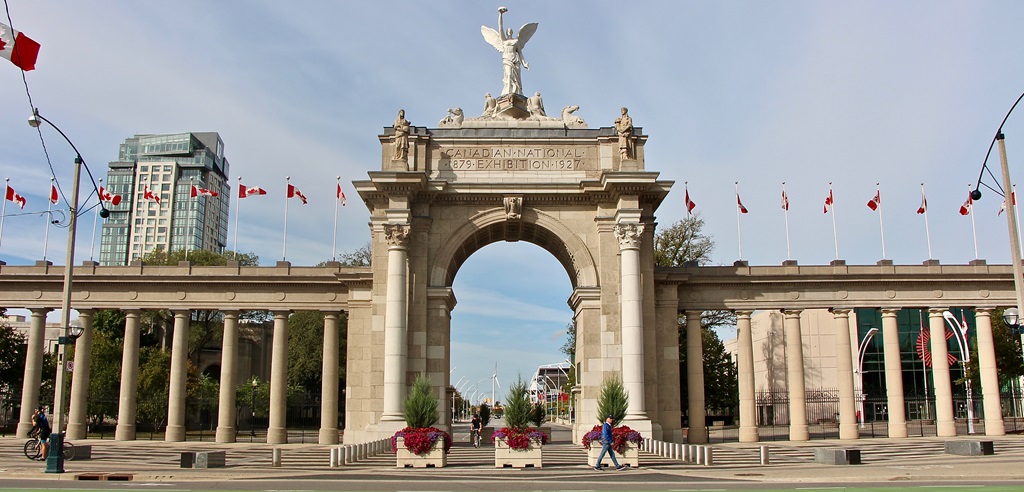
- The Princes’ Gates (an iconic symbol of Toronto)
preserve the spirit of the city’s grand exhibition era.

A Community with Strong Urban–Rural Links
Though surrounded by Toronto’s modern neighbourhoods, the history of Exhibition Place continues to honour its agricultural foundations. Regional traditions, creative industries, and long-standing organizations maintain strong connections between the city and rural Ontario.
This relationship is exemplified each year by the Canadian National Exhibition, the site’s most enduring and recognizable event.
The Perfect Companion to the CNE
The CNE reflects many of the core qualities that define Exhibition Place:
- A respect for history and heritage
- A spirit of innovation
- National and regional pride
- Agricultural traditions
- Community engagement
- Cultural diversity
Together, Exhibition Place and the CNE tell a unified story — one of progress, celebration, and the enduring importance of shared spaces in a growing country.
A Landmark District with a Living Legacy
Whether exploring its historic buildings, walking its waterfront paths, or celebrating long-standing traditions like the Canadian National Exhibition, Exhibition Place offers a vibrant blend of heritage and modern energy.
It is a district where Canadian history is showcased, where community and innovation thrive, and where Ontario’s rural and urban stories come together.