










A Road Less Traveled: Ontario’s Backroad Field Guide – Scene One
Ontario’s rural roads are full of small mysteries, lines of birdhouses like fence-top condos, quilt blocks winking from barn sides, maples marching down a lane, a quiet dam guarding a beaver-blue lake. None of it is random. Every sign, fence, treeline, and ripple was put there to solve a problem or tell a story. This four-part Backroad Field Guide translates those clues for curious travellers. Think of it as a glovebox companion: friendly, factual, and tuned to the way Ontario works, from the Shield’s rock and water to the patchwork farms of the south. Read a section, take a drive, and you’ll start seeing patterns everywhere: how wind makes snow fences necessary, why bridges look the way they do, which wildflowers mean mid-July, and where the birds like to nest. The more you decode, the richer every county road becomes.
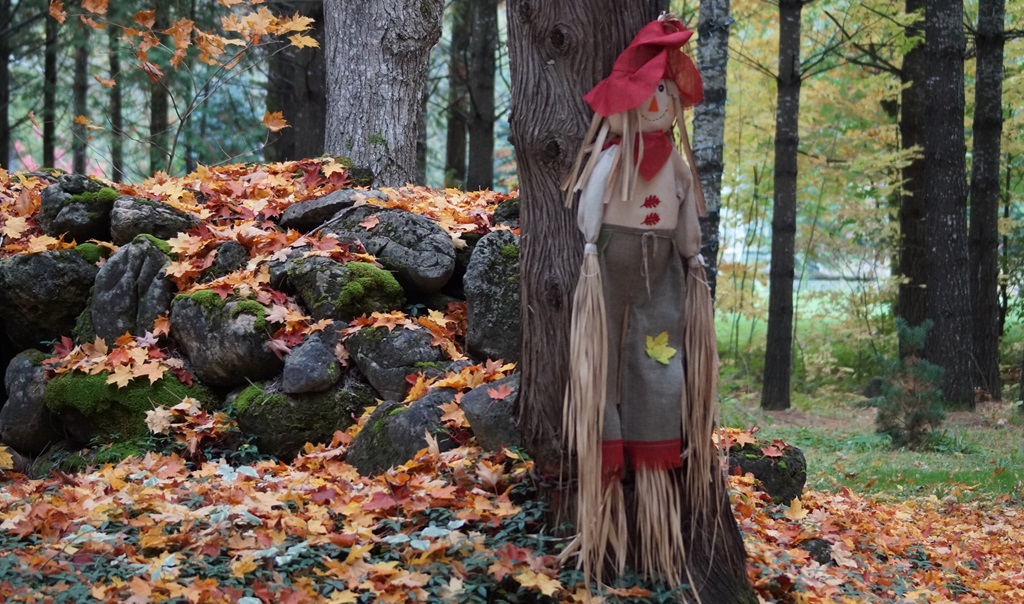
Country Road Scene
1) Fence-Line Condos: Why Tiny Birdhouses Appear in a Row
Drive a rural concession road in Ontario and you’ll sometimes spot a parade of small wooden boxes marching along a fence. They’re not dollhouses; they’re “nest-box trails” set up for cavity-nesting songbirds, especially Eastern Bluebirds and Tree Swallows.
These species historically nested in old woodpecker holes and weathered fence posts. As hedgerows thinned and dead trees disappeared, conservationists and landowners stepped in with purpose-built boxes. A “trail” simply means multiple boxes spaced out, often 25–50 metres apart, so each pair of birds can guard a territory without feuding with the neighbours. You’ll sometimes see boxes mounted in pairs on a single post; that trick lets swallows and bluebirds share a stop without competing as fiercely.
Look closely (from the road, no trespassing): the round entry holes are sized to invite the intended birds and deter larger, pushier species. Predator guards (simple cones or short lengths of stove pipe) keep raccoons and snakes from reaching inside. Orientation matters too: boxes are usually faced away from prevailing winds and set roughly chest-high so they can be monitored.
Why do farmers and volunteers bother? Bugs. Swallows and bluebirds devour flying insects, a natural ally for hayfields, pastures, and orchards. The boxes also support local biodiversity and make for superb roadside theatre each spring. If you’d like to help, you can report sightings to citizen-science programs, but the best etiquette is to admire from afar and let the trail managers handle checks and clean-outs.
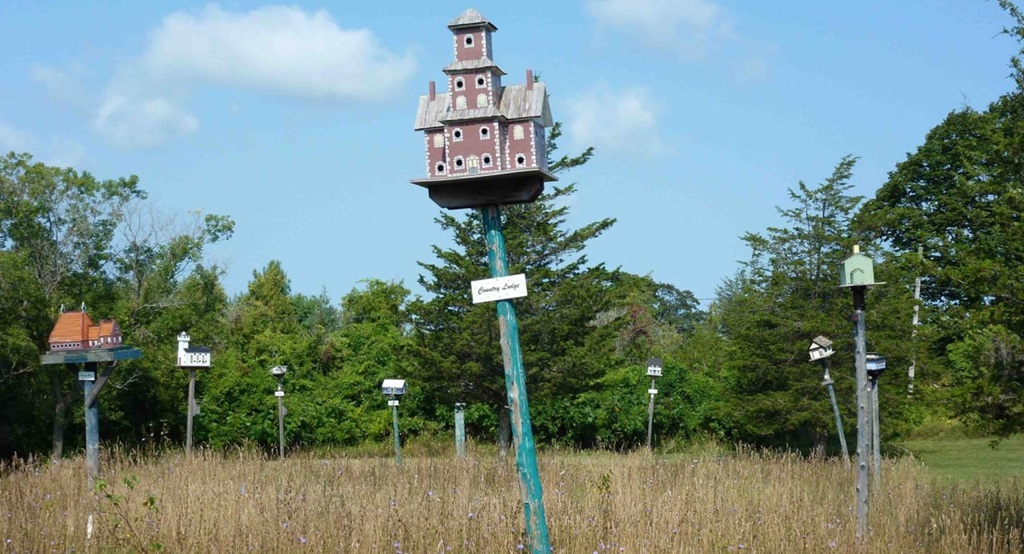
Row of Birdhouses
2) Mailbox Folk Art: Rural Routes with Personality
Not every rural address has a standard-issue metal box. Out where the snowplows roar and the roads run long, mailboxes sometimes become miniature billboards for identity and craft. You’ll see milk-can boxes by former dairy farms, fish-shaped boxes near good angling water, tractor silhouettes, canoe cut-outs, or bright hand-painted scenes that punch through winter grey.
The artistry is fun, but the boxes are still hard-working objects. They need to be sturdy enough for plow splash, mounted high enough to clear snow berms, and practical for delivery. Big, legible civic numbers help first responders find the lane after dark; reflective decals are common. Hinges, latches, and weather seals keep the mail dry in sideways rain. Posts are often set back a safe distance so the box can “break away” if clipped, rather than becoming a roadside battering ram.
Why all the whimsy? Pride and wayfinding. In landscapes of fields and forest, a distinctive box becomes a landmark, “turn left at the red canoe mailbox.” It’s also a wink to passersby: a small act of public art that says, “someone cares about this place.” Even as some areas move to community mailboxes, the classic rural route still delivers a gallery’s worth of creativity, one driveway at a time.
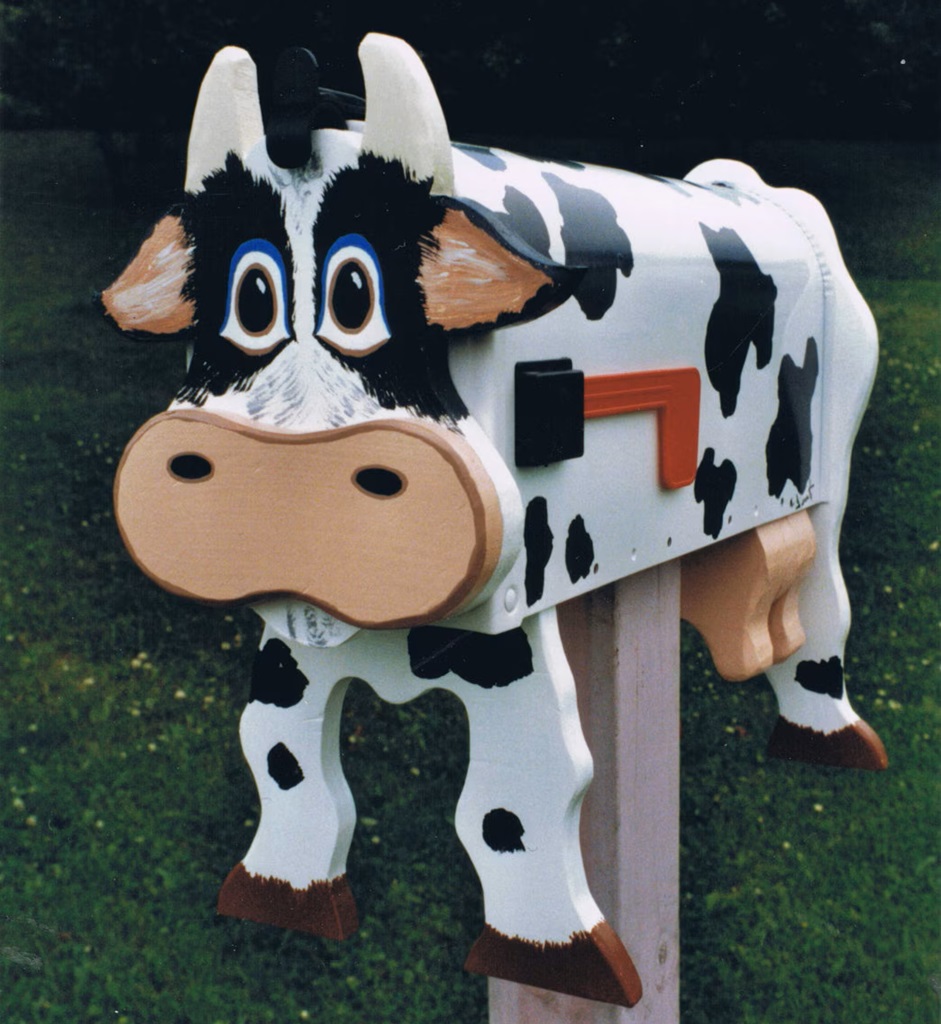
Decorated Mail Box
3) Bridges That Tell the Road’s Backstory
Ontario’s backroads cross an encyclopedia of bridge types, each chosen for geology, budget, and era. Spot a light, lacy metal truss with a triangular web? That’s likely a late-19th or early-20th-century Pratt or Warren truss: efficient, quick to erect, and strong for the wagon-to-early-truck transition. See a low, graceful concrete arch, the “bowstring” look? Those early motor-age spans married new materials with simple forms that could be cast on site.
Some river crossings ride on deep steel girders, modern workhorses that shrug off salt and heavy farm equipment. Timber trestles on rail trails echo the province’s rail boom; many were adapted for cyclists and hikers when freight routes shifted. In snowbelt country, you may notice tall abutments and angled “cutwaters” on piers: insurance against spring ice and fast freshets.
Covered bridges, where they survive, wear a wooden roof not for romance but preservation; the cover keeps structural timbers dry and lasting decades longer. Modular “Bailey” bridges, squadrons of bolted steel panels, appear when floods take out a crossing; they’re the Meccano set of emergency infrastructure.
Why so many styles? Span length, river behaviour, available materials, and traffic loads all dictate the choice. A shallow, rocky creek might get a simple culvert or short slab; a wide, flood-prone river needs longer spans, higher approaches, and fewer mid-channel piers. When a bridge seems “odd,” you’re probably looking at a solution tailored to the exact quirks of that valley, and to the era’s engineering playbook.
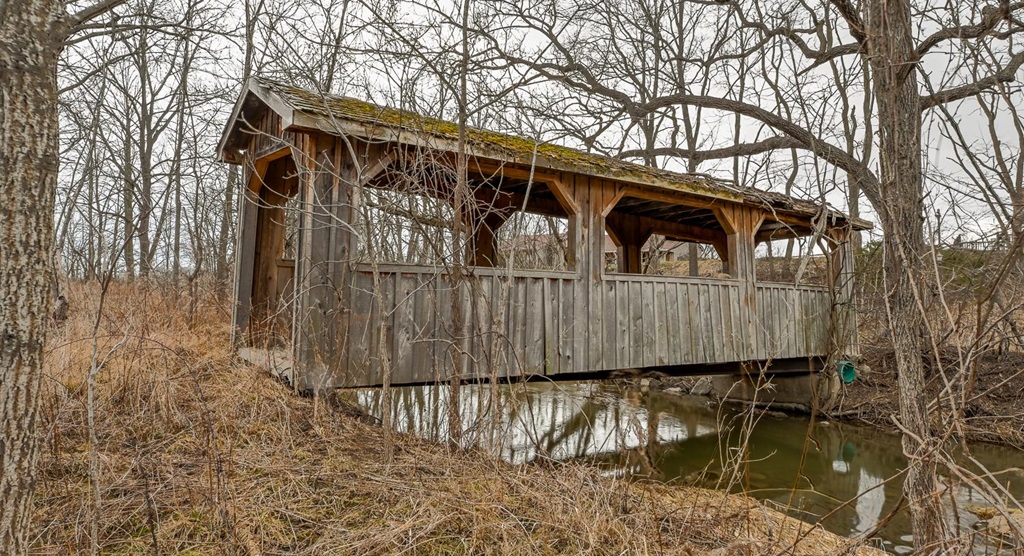
Old Bridge
4) Remote Dams vs. Free-Flowing Water: Two Ways a River Lives
Head north or deep into Crown land and you’ll meet quiet dams in surprising places: low concrete sills on canoe routes, stout timber-crib structures at the lips of shield lakes, or squat steel gates beside a portage trail. Many began life serving mills or logging drives, later repurposed for flood control, navigation, or small hydro. Others help manage seasonal water levels across a chain of lakes so spring doesn’t swallow docks and autumn doesn’t strand canoes in boulder gardens.
A small control dam usually includes a spillway (where water constantly passes) and an adjustable section, stop-logs, slide gates, or valves, so operators can fine-tune outflow. You might notice a staff gauge (a ruler fixed to rock) that tells paddlers and technicians the current level. Safety signage and worn footpaths around the structure hint at regular maintenance and portage traffic. And no, not every dam is human-made at all: beaver dams, lumpy, woody, wonderfully leaky, are the province’s original hydrologists, spreading water into wetlands that shelter birds, turtles, and amphibians.
Free-flowing rivers and creeks write a different story in riffle-pool rhythm. Riffles oxygenate the water; pools offer shelter; meanders chew at one bank and build bars on the other, constantly rearranging gravel and habitat. Cold, shaded headwaters nurture trout and sensitive invertebrates. Spring freshets move logs and nutrients downstream; summer baseflows reveal bedrock shelves and crossing stones. Without a dam to slow sediment or block passage, fish and eels migrate more naturally, and floodplains soak up high water like a sponge.
Neither scene is “right” everywhere. Dams can offer real community benefits, but they also fragment habitat; free-flowing reaches are ecological powerhouses that sometimes put roads and fields at risk when the sky opens. The backroad lesson is simple: that quiet wall in the bush and that chattering creek in the next township are both working, just in very different ways.
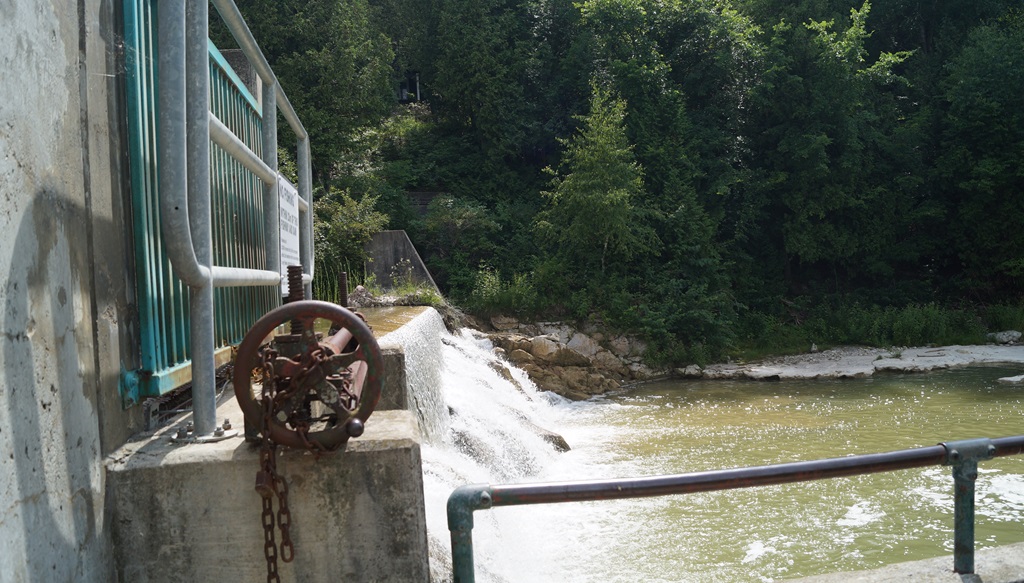
Old Remote Dam