
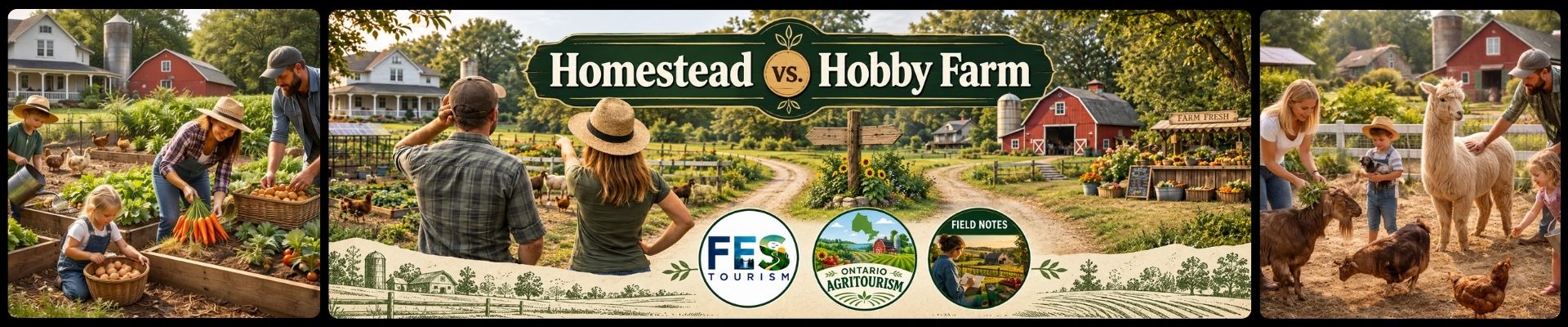









Homesteader vs. Hobby Farmer (and a few better names in between)
If you’ve ever stood at the fence line of a small acreage and wondered, “Is this a homestead, a hobby farm, or something else entirely?” you’re not alone. Modern rural life comes in many flavors, and the labels can be fuzzy. Here’s a friendly, no-drama guide to what these terms usually mean, where they overlap, and a few alternative names that might fit even better.
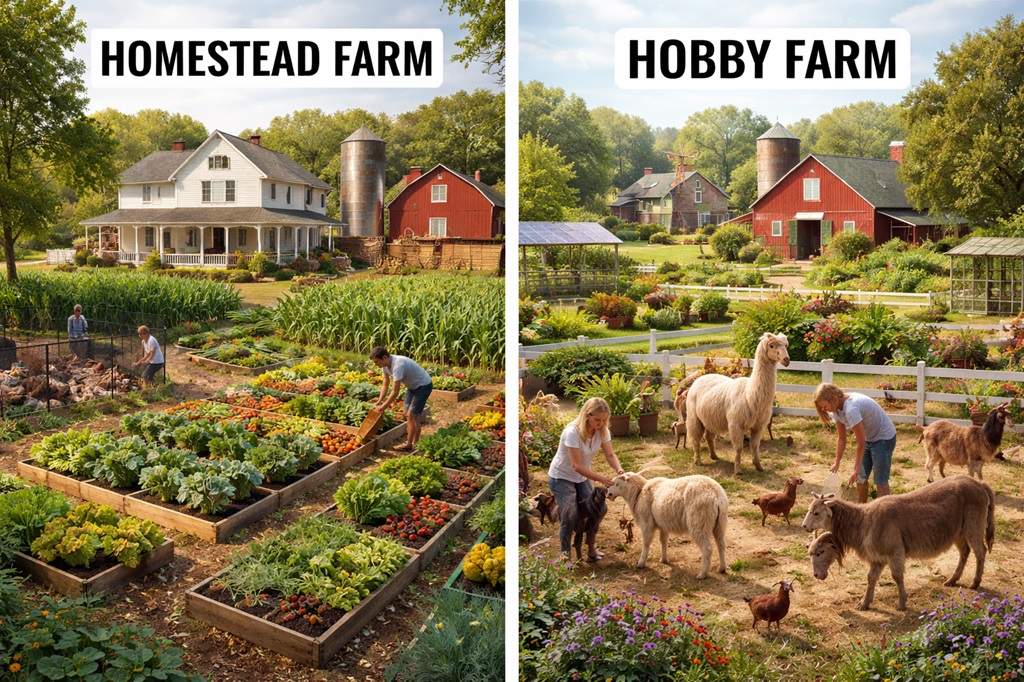
Homestead vs Hobby Farm
What people mean by “homesteader”
At its heart, homesteading is about self-reliance. Think gardens that feed the household all season, chickens for eggs, maybe goats for milk, fruit trees, a pantry stacked with canned tomatoes and pickles, and a workshop where repairs happen before shopping does. A homesteader might still have an off-farm job (lots do), but the goal on the land is food security, skill-building, and resilience. Selling a few dozen eggs or extra zucchini is great, but it’s usually secondary to feeding the family, cutting store dependence, and living closer to the land.
Common markers of a homestead:
- Multiple small enterprises (garden + layers + meat birds + orchard + bees, etc.).
- Preserving, fermenting, curing, and from-scratch cooking.
- DIY infrastructure (fencing, rainwater capture, compost systems).
- A long-term plan to increase self-sufficiency year over year.
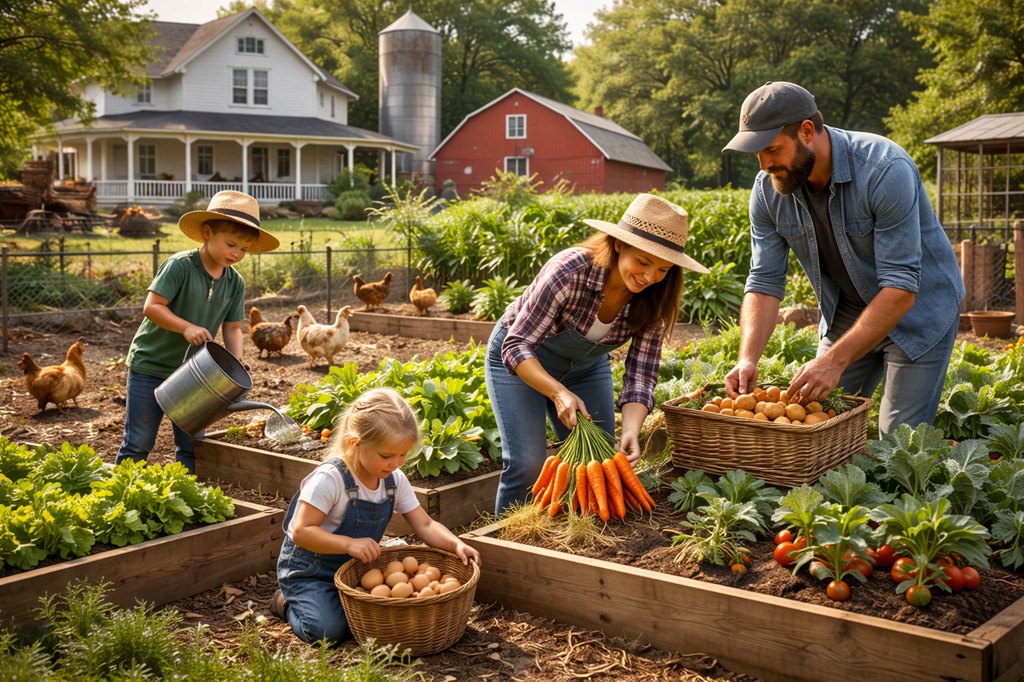
Homestead Family at Work
What people mean by “hobby farm”
A hobby farm is any small farm where the primary purpose is enjoyment, education, or lifestyle, not profit or self-sufficiency. The owners typically earn most of their income elsewhere. They still work hard (animals never take a day off), but the motivations are different: fresh air, time with animals, a peaceful place for kids to grow up, maybe showing a few animals at the fair, and sharing produce with friends.
Common markers of a hobby farm:
- A few animals or a garden sized to the time budget.
- Projects chosen because they’re fun, not because they “pencil out.”
- Occasional sales (pumpkins, honey, cut flowers) that help offset feed or seed costs.
- Pride in the experience more than the output.
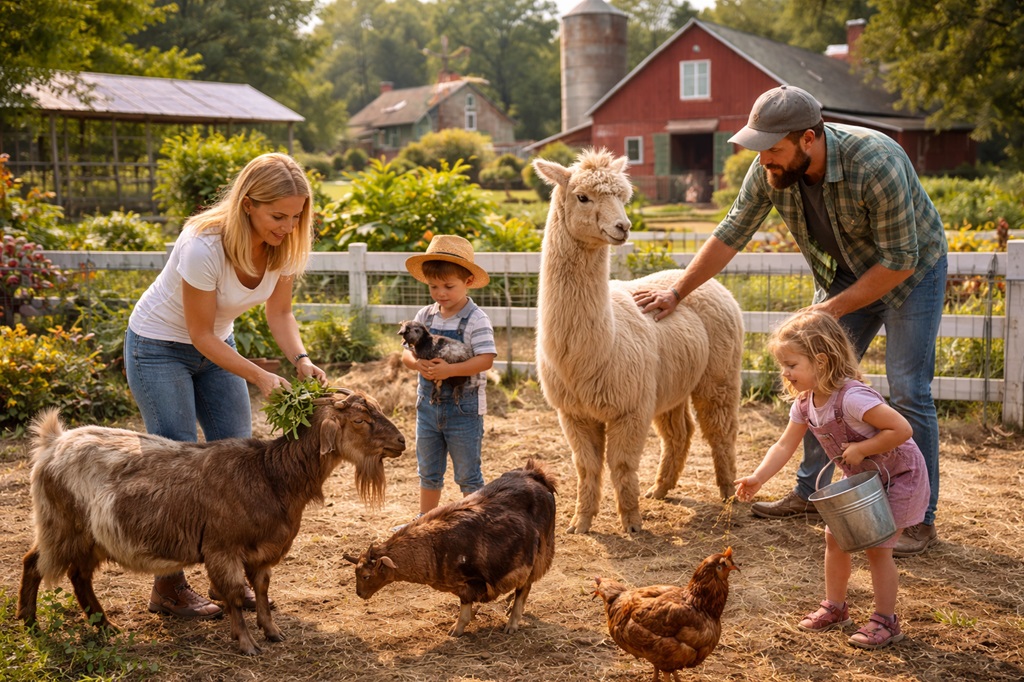
Hobby Farm Family at Work
Where they overlap (hint: a lot)
Walk onto a homestead or a hobby farm and you’ll likely see many of the same things: raised beds, fruit trees, chicken tractors, a well-used barn, and a to-do list longer than a fence rail. Both:
- Care deeply about good food and animal welfare.
- Learn constantly (fencing, soil, pasture, pests, there’s always a next lesson).
- Build community, through seed swaps, farm-gate sales, or lending a brooder lamp to a neighbour in a pinch.
The difference is mainly intent. If the food you raise is primarily for your own table and you’re chasing independence, “homestead” fits. If your main aim is joy, education, and the sheer pleasure of muck boots and sunsets, “hobby farm” may feel right.
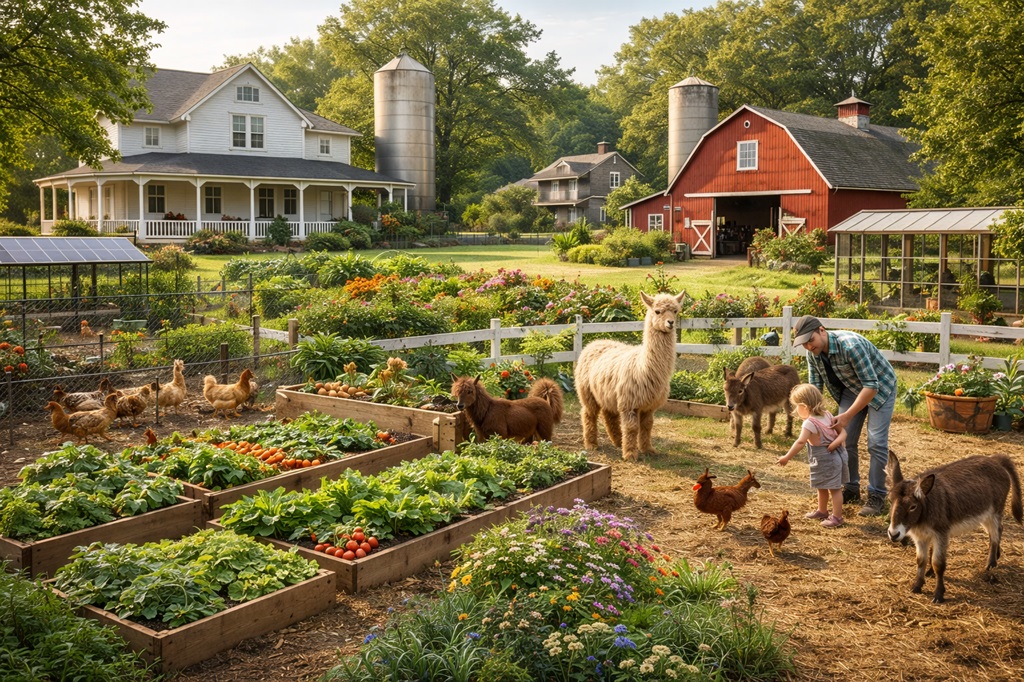
Combining Both Types of Farms
The small farm / market garden lane
There’s a third lane that often gets left out of the conversation: the small farm that’s run as a business. Here the yardsticks are customers, revenue, and efficiency. You’ll see high-value crops on small acreage (greens, microgreens, garlic, cut flowers), tight crop rotations, season extension (low tunnels, caterpillar tunnels, greenhouses), and a marketing plan (farm stand, CSA boxes, restaurant sales, or farmers’ markets).
Markers of a small farm / market garden:
- Production plans and bed maps, not just “let’s plant more tomatoes.”
- Systems for harvest, washing, storage, and delivery.
- The farm is expected to pay its way (or at least be on that path).
Someone can be a homesteader and run a small, profitable side enterprise, selling sourdough, seedlings, or pastured chicken, so long as they can juggle both aims.
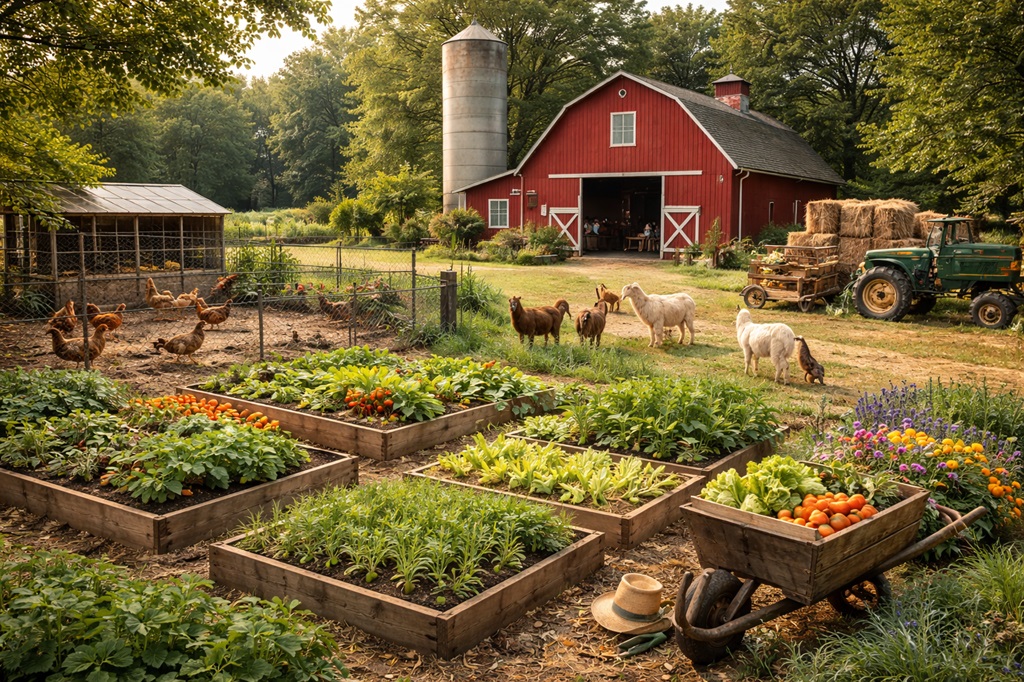
Small Working Farm
Other labels you might like
Words carry baggage; sometimes a different label fits better. Consider these:
- Smallholding (common in the UK): A small, mixed-use farm with animals and crops. Neutral, practical, and friendly.
- Farmstead: Emphasizes the home + working buildings + surrounding land; doesn’t presume profit or self-sufficiency.
- Micro-farm: Very small acreage with intensive production (often business-leaning).
- Acreage: A catch-all in some regions for any rural property larger than a lot but smaller than a big farm.
- Lifestyle block (NZ/Aus): Like “hobby farm,” but without the hobby connotation, focus on rural living.
- Part-time farm: Honest and useful when owners work off-farm but still produce food and/or sales.
- Homestead-style smallholding: A tidy mash-up when you do a bit of everything for the household first, market second.
Pick the one that feels true to your goals and season of life, and don’t be afraid to change it as your place evolves.
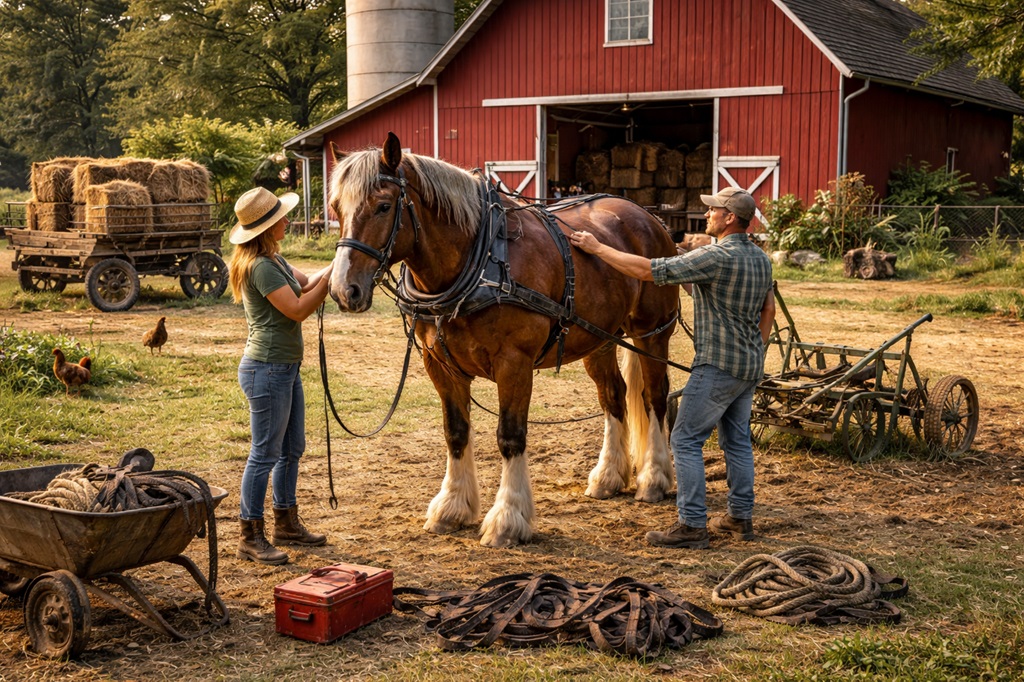
Getting ready to work the fields
A quick “try-on-the-labels” guide
Ask three questions and the right label usually pops out:
- What’s the primary outcome you’re chasing?
- Food and skill self-reliance → Homestead
- Joy, education, animals + gardens for the love of it → Hobby farm
- Income from the land, even part-time → Small farm / market garden
- How do you measure success?
- Pantry shelves, resilience, fewer grocery trips → Homestead
- Happy animals, family time, a gorgeous pumpkin patch → Hobby farm
- Sales, repeat customers, efficient systems → Small farm
- Where does your time go?
- Many small, household-focused enterprises → Homestead
- Chosen projects you enjoy, at a pace that fits life → Hobby farm
- Production blocks, harvest days, deliveries → Small farm
If you answer “a bit of all three,” congrats, you’re in the common and wonderful Venn-diagram middle. You can simply say: “We’re a small family farmstead with a homesteading streak.”
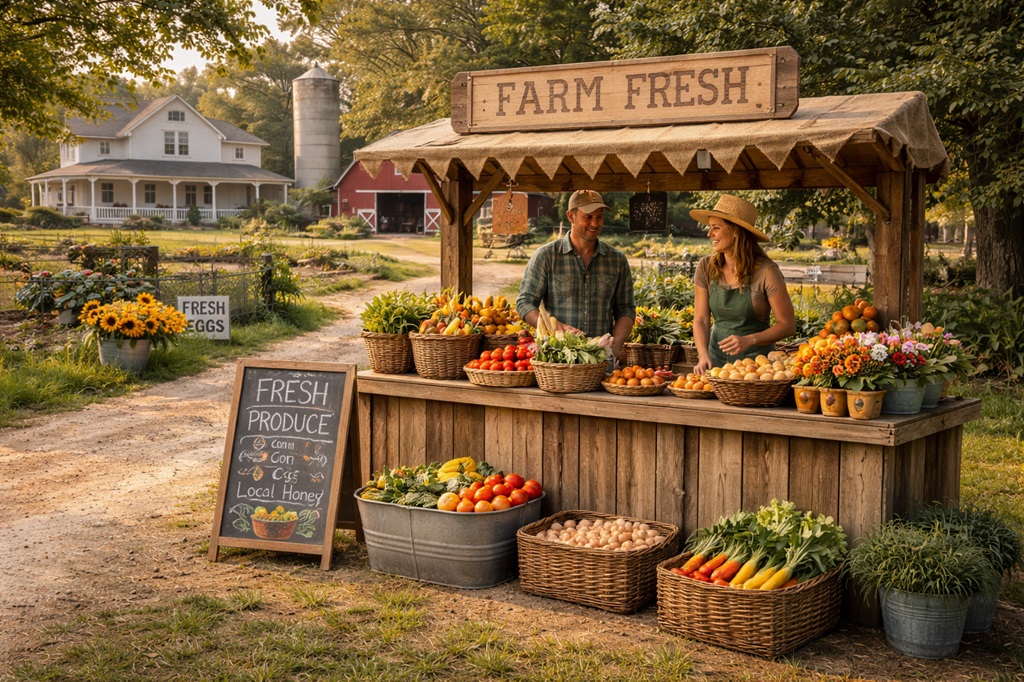
Small farm with a Farm Market Stand
Why the label matters (and why it doesn’t)
Labels help set expectations, for you, for neighbours, and for anyone who asks “What do you do out there?” They guide decisions: a homesteader might invest in perennial food systems and preservation gear; a hobby farmer might choose breeds that are gentle with kids; a small farm might pour funds into wash/pack facilities or low tunnels.
But the label doesn’t change the real magic: turning sun, soil, and effort into food and community. Whether you call it a homestead or a hobby farm, it’s the daily rhythm, feeding, weeding, fixing, harvesting, that defines the place.
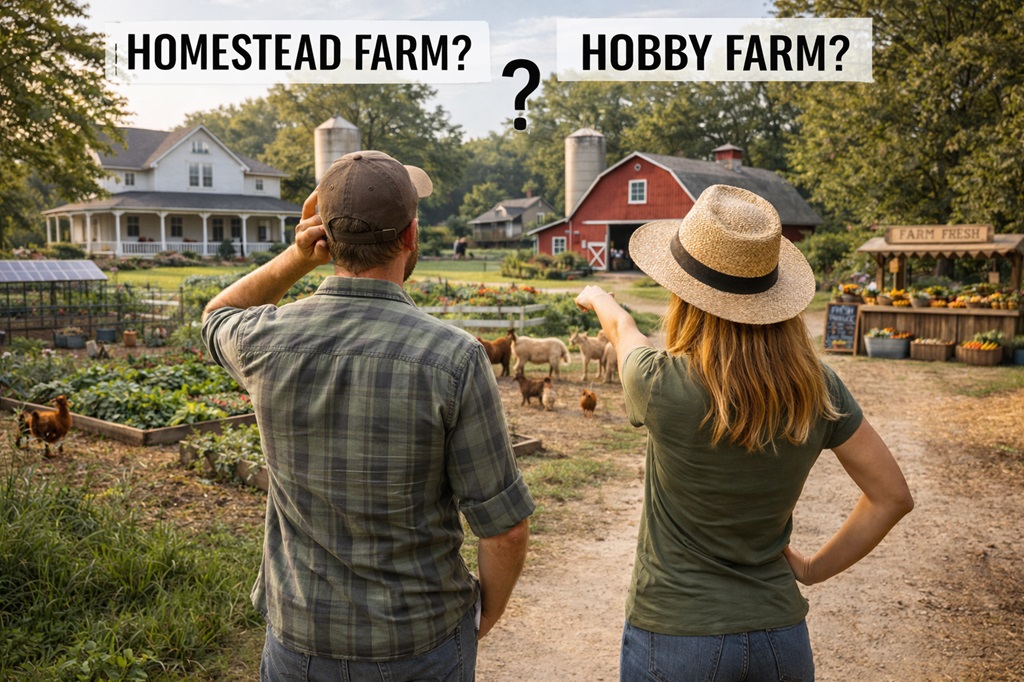
Homestead or Hobby Farm?
A friendly bottom line
- If it feeds your household first, teaches you to fix nearly anything, and has a pantry that looks like a rainbow in jars, call it a homestead.
- If it feeds your soul first, fills weekends with 4-H shows, flower rows, and a few hens with names, call it a hobby farm.
- If it feeds customers, even part-time, and you track bed turnover and delivery routes, you’re running a small farm / market garden.
And if you’re happily straddling those lines? Try this: “We’re a family farmstead, part homestead, part market garden, 100% us.” It’s accurate, welcoming, and leaves room for the land (and your plans) to grow.
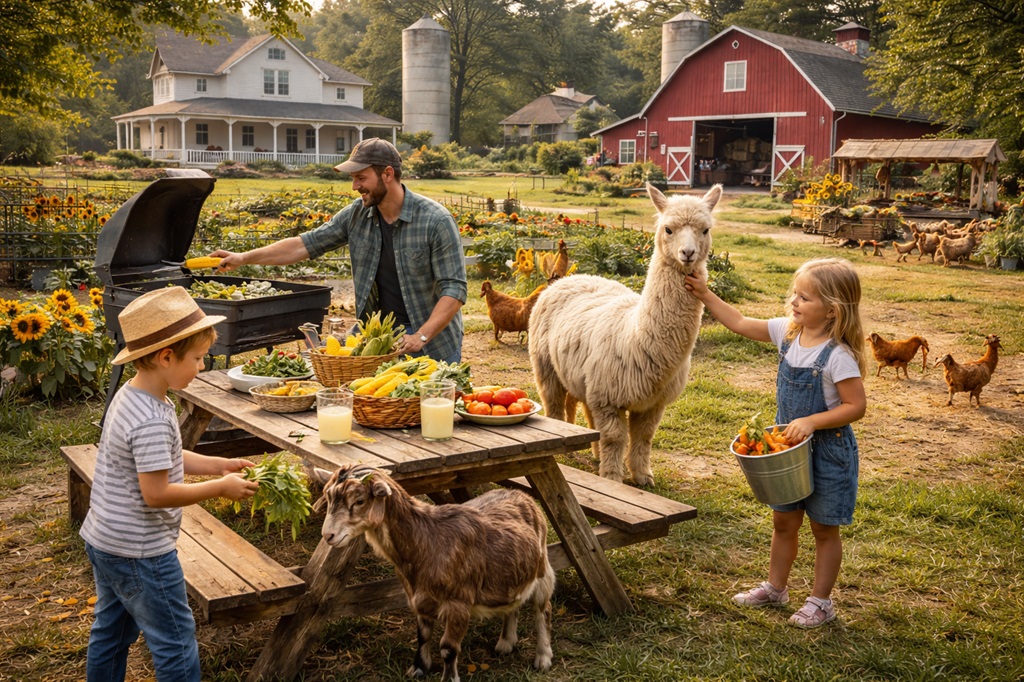
Family enjoying their small farm